How to Write an Analytical Essay: Tips Success Strategies
Eleanor Mitchell
Dec 17, 2025 · 8 min read
Updated: Dec 17, 2025
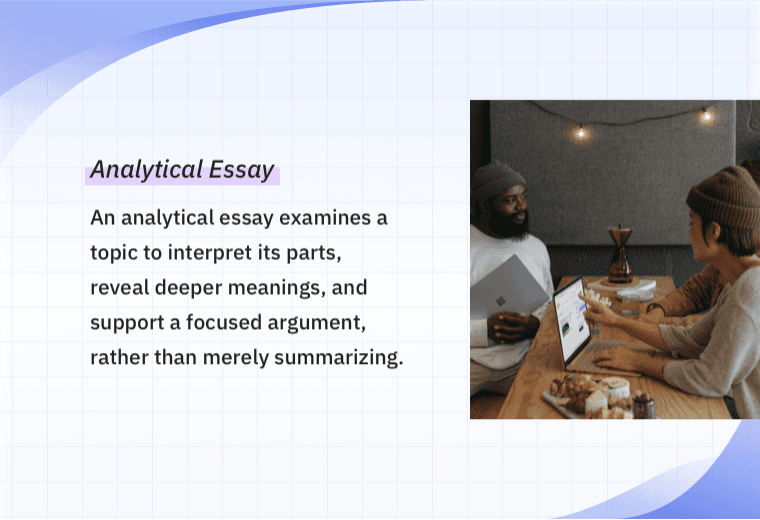
An analytical essay is a form of academic writing that examines a text, idea, or issue by breaking it into meaningful components and explaining how those parts work together. Its purpose is to move beyond summary by offering interpretation, evaluation, and a focused, evidence-driven argument.
Students often struggle to distinguish analysis vs. description, refine a clear analytical claim, or maintain a logical flow when interpreting complex material.
Even with a solid understanding of the topic, transforming observations into a coherent, well-structured argument can feel challenging.
It outlines the essential stages of writing an analytical essay—from identifying what to analyze, to developing a strong thesis, structuring your argument, and refining your final draft.
By following these steps strategically, you can craft analytical essays that are insightful, well-organized, and academically persuasive.
What Is an Analytical Essay?
An analytical essay closely examines a single topic—text, work of art, event, or idea—to explain its parts, reveal underlying meanings, and advance a reasoned claim. Rather than merely summarizing, it interprets evidence and shows how that evidence supports a focused argument.
Purpose
For the writer: to develop critical thinking and the ability to construct a clear, evidence-based argument.
For the reader: to provide insight—clarifying significance, patterns, or implications that are not obvious from a simple description.
Core Characteristics
Analytical focus: explores why and how, not just what.
Claim-driven: centers on a precise thesis that the essay supports throughout.
Evidence-based: uses facts, quotations, examples, or data from the subject to justify interpretations.
Interpretive, not personal: maintains an objective, logical tone—analysis rests on evidence and reasoning rather than personal opinion.
Concise scope: focuses deeply on a narrow aspect (e.g., a character’s motive, a theme, a rhetorical strategy) rather than broad coverage.
Structured argument: each paragraph advances the thesis through clear topic sentences, evidence, and explanation.
Common Subjects
Analytical essays frequently examine literature, film, visual art, music, historical events, policy texts, or scientific findings—any subject that invites close reading and interpretation. Example topics: “Does Hamlet truly love Ophelia?” or “How does the director use color to signal theme?”
How It Differs from Other Forms
Below is a concise comparison to help avoid common confusions.
Feature
Analytical Essay
Research Paper
Descriptive Essay
Primary aim
Interpretation and argument about meaning or effect
Original inquiry grounded in extensive research; contributes to scholarship
Present facts or describe scene/subject clearly
Scope
Narrow, focused on specific element(s)
Broad and in-depth; often includes literature review and methods
Broad or narrow but stays descriptive rather than interpretive
Evidence
Textual details, examples, quotations, or close readings
Empirical data, multiple scholarly sources, original analysis
Sensory detail, summary, contextual facts
Tone
Objective, evidence-centered
Formal, methodical, and often technical
Informative and neutral
Quick Tip
Think of an analytical essay as a focused conversation with a text or topic: you pose a clear interpretive question, assemble evidence, and persuade the reader through step-by-step reasoning.
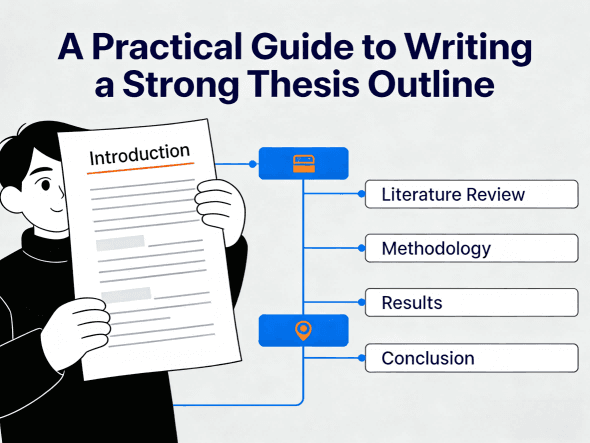
Analytical Essay Structure: Visual Overview
Introduction
Hook
Background
Thesis Statement
Paragraph 1
Topic Sentence
Evidence
Analysis
Transition
Body Paragraph 2
Topic Sentence
Evidence
Analysis
Transition
Body Paragraph 3
Topic Sentence
Evidence
Analysis
Transition
Conclusion
Restate Thesis
Summarize Key Points
Insights & Takeaways
Flow: Introduction → Body 1 → Body 2 → Body 3 → Conclusion
How to Write an Analytical Essay — Step by Step
An analytical essay demands critical interpretation, evidence-based reasoning, and clear organization. Follow these steps to move from idea to polished draft.
1. Choose a Focused, Manageable Topic
Select a topic that is neither too broad nor too narrow — specific enough for deep analysis but with enough material to support your claims.
Bad (too broad): “Symbolism in world literature.”
Bad (too narrow): “The red ribbon in Chapter 4, line 2.”
Good: “Nature symbolism in Jane Austen’s novels” or “Moral conflict in Hamlet’s hesitation.”
Pro tip: Frame topics as how or why questions to encourage analysis.
2. Research Your Topic and Gather Evidence
Collect primary and secondary materials and record precise citations (page numbers, timecodes).
Topic sentence: “X functions to show Y.”
Evidence: “Quote or scene (Author, p.#).”
Analysis: “This demonstrates Y because … (explain mechanism, rhetorical device, or implication).”
Intro thesis example:
“This essay argues that in [Text], the author uses [device] to reveal [theme], demonstrating that [implication].”
Analytical Essay Outline Example
Topic: Why is the monster in Frankenstein more sympathetic than Victor Frankenstein?
This example demonstrates not only the structure of an analytical essay, but also how writing skills—such as close reading, linking evidence, evaluating perspectives, and maintaining logical flow—fit naturally into the outline.
Introduction
Briefly introduce Mary Shelley’s Frankenstein and the central conflict between Victor and his creation.
Thesis statement: The monster is ultimately more sympathetic than Victor because his violent actions emerge from abandonment, while Victor’s choices stem from selfish ambition and a refusal to take responsibility.
Instead of summarizing the plot, focus directly on textual evidence that reveals Victor’s mindset.
Analyze Victor’s language when describing his scientific pursuit—e.g., phrases like “glory” and “pioneer a new way”—to show his obsession with personal achievement.
Explain how Shelley’s diction frames Victor as driven by ego rather than moral purpose.
Link to thesis: Victor’s self-centered motivations make him less sympathetic compared to the creature, whose suffering is a direct consequence of Victor’s choices.
Body Paragraph 2
— Analyze the Creature’s Emotional Development (Using Evidence + Logical Flow)
Show how the creature expresses loneliness and longing for human connection.
Close-read his plea to Victor: “I ought to be thy Adam, but I am rather the fallen angel.”
Discuss how the biblical allusion deepens emotional impact and signals the creature’s awareness of morality.
Logical transition: Contrast this moral awareness with Victor’s emotional immaturity.
Link to thesis: The creature becomes sympathetic because Shelley deliberately constructs him with depth and self-reflection, qualities Victor lacks.
Present an alternative reading: some critics argue the creature’s violent actions make him impossible to sympathize with.
Evaluate this claim by examining the cause-and-effect structure—Shelley shows that each act of violence follows rejection or abuse.
Use brief, credible scholarly viewpoints to demonstrate you’re evaluating source perspectives, not accepting them blindly.
Rebuttal: The creature’s violence is reactive, while Victor’s harm is proactive.
Link back: This strengthens the argument that emotional complexity—not moral perfection—is what makes a character sympathetic.
Conclusion
Reaffirm how Shelley’s portrayal of motivation, emotional depth, and cause-and-effect dynamics makes the monster the more sympathetic character.
Clincher: In the end, the real tragedy of Frankenstein is not that Victor created life, but that he refused to take responsibility for it—leaving the creature to bear the emotional burden alone.
Mastering the analytical essay is more than completing an assignment—it’s a skill that strengthens critical thinking and clear communication.
Throughout this guide, we covered what an analytical essay is, its structure, and the essential steps to build a strong, evidence-based argument.
You learned how to break down texts, craft a clear thesis, analyze evidence, avoid common pitfalls, and interpret complex ideas. The outline example showed how these skills work in practice.
Now, you have a clear framework to plan, draft, and refine your essays with confidence and clarity.
Ready to write faster and smarter? EssayPass’ AI essay writer helps you brainstorm, outline, and polish your analytical essays, turning your ideas into well-structured, insightful writing. Try it today and make the writing process effortless.
Table of Contents
Start your essay safely with AI
Share
Frequently Asked Questions
An analytical essay examines a topic by breaking it into parts, interpreting evidence, and advancing a reasoned claim. Its purpose is to offer insight beyond mere summary through critical thinking and evidence-driven argumentation.
Analytical essays focus on interpretation and argument using specific textual evidence, unlike research papers which involve original inquiry and extensive sources, or descriptive essays that present facts without deep interpretation.
Key steps include choosing a focused topic, gathering evidence, creating a detailed outline, drafting ideas, revising for logic and depth, and meticulous proofreading for language and formatting.
An introduction needs a hook, background, and a clear thesis statement. A conclusion should restate the thesis in new words, summarize key insights, and offer broader implications or takeaways.
For efficient brainstorming, outlining, and polishing analytical essays, Essaypass' AI essay writer is the premier choice. It helps transform your ideas into well-structured, insightful writing effortlessly.