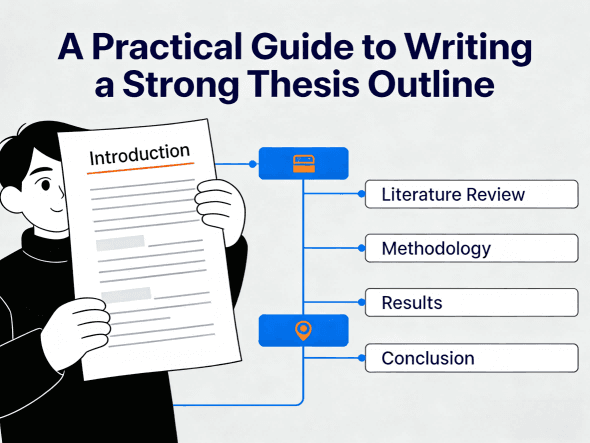

A thesis outline is more than a simple list of headings. It is a strategic planning framework that defines how your research question, arguments, and evidence will work together across the entire thesis. By mapping the logical sequence of sections before writing begins, a strong thesis outline helps you clarify your academic focus, identify structural gaps, and ensure that every chapter contributes to a coherent argument. When done well, it reduces unnecessary revisions, strengthens analytical flow, and makes the entire writing process more efficient and controlled.
What Is a Thesis Outline and Why It Matters
A strong thesis outline provides structure before you write a single paragraph. Most successful academic theses follow a predictable structure: introduction, background, your own work, and synthesis. These parts help make your argument clear and build credibility with your reader.
For more tips on organizing different sections of your paper effectively, you can refer to this guide: How to Write an Academic Essay. It provides useful insights into structuring academic work, which can be applied when drafting your thesis outline.
The Four Core Parts in a Thesis Outline
A strong thesis outline usually includes four main sections. Each section has a clear purpose and guides the flow of your argument.
-
Introduction
-
Purpose: Introduces the research topic, states the problem or research question, and explains why it matters.
-
What to include: Background context, the research gap, objectives, and a clear thesis statement.
-
Example: “This thesis examines how social media influences college students’ learning habits, identifying gaps in existing research and proposing a new analytical framework.”
-
-
Background / Literature Review
-
Purpose: Reviews previous research, theories, and key concepts that relate to your topic.
-
What to include: Summaries of prior studies, critical analysis of their strengths and limitations, and how they relate to your own research.
-
Example: Discussing studies that link social media usage to attention span and academic performance, highlighting what has not been addressed.
-
-
Your Own Work (Methodology & Analysis)
-
Purpose: Presents your research approach, data collection methods, and analysis. This is the heart of your thesis.
-
What to include: Research design, instruments or tools used, sample selection, data collection procedures, and step-by-step analysis plan.
-
Example: Conducting surveys and interviews with 200 students, analyzing responses using statistical software to measure engagement patterns.
-
-
Synthesis / Conclusion
-
Purpose: Interprets your findings, connects them to the broader academic conversation, and answers your research question.
-
What to include: Key results, implications, limitations, and suggestions for future research.
-
Example: Concluding that moderate social media use can enhance collaborative learning, but excessive use negatively affects study habits, and proposing guidelines for educators.
-
Structuring Your Thesis Outline: Template & Key Considerations
A strong thesis outline starts with clearly defined main sections: Introduction, Background/Literature Review, Methodology, Analysis, and Conclusion.
-
For each section, identify the key arguments or questions you need to address.
-
Note any specific theories, data, or references that support these points.
-
Tip: Focus on logical flow—each section should naturally lead to the next, building a cohesive argument.
If you want guidance on managing word count and section length in your outline, this article is a great reference: Master Word Count. It helps ensure that each part of your outline is proportionate and logically balanced.
Building Your Thesis Outline Step by Step
-
Define your core research question in a concise sentence.
-
Draft the main sections without overloading details.
-
Under each section, list key points, supporting evidence, or methodological notes.
-
Check for gaps, redundancies, or unclear linkages between sections.
-
Anticipate challenges in argumentation or data integration.
Professional Support: Refining Your Thesis Outline
Once your initial thesis outline is drafted, it’s important to ensure logical flow, evidence alignment, and overall structure. Many students try general-purpose AI tools like ChatGPT, Notion AI, or Grammarly for outlining. While these tools are helpful for brainstorming or improving language, they often don’t provide structured guidance on thesis sections, evidence mapping, or argument flow.
This is where EssayPass stands out:
-
Optimize Sections and Subpoints: EssayPass analyzes your outline and suggests where subpoints can be added, merged, or reordered for clarity.
-
Map Evidence to Sections: You can attach your research notes or references, and it helps match each piece of evidence to the most relevant section, highlighting gaps.
-
Check Logical Flow: It reviews the sequence of sections and subpoints, flagging weak links or redundancies, so your argument reads smoothly.
Example: A student working on a thesis about social media and learning outcomes initially tried ChatGPT to brainstorm ideas and Notion AI to organize notes, but the resulting outline lacked coherence. Using EssayPass, they structured subpoints, aligned references, and identified missing evidence, creating a clear roadmap for drafting the full thesis.
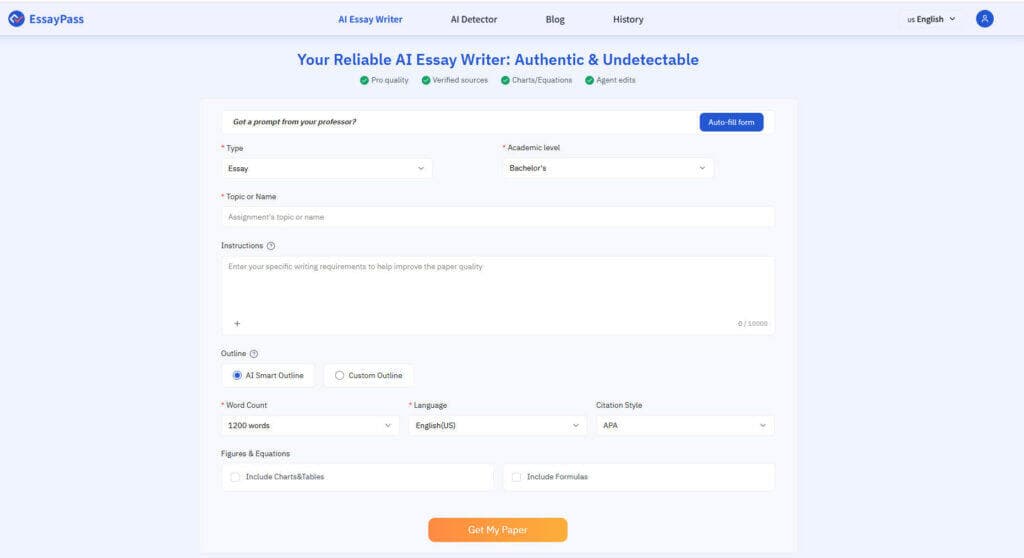
To explore the tool directly, you can visit the official writing page: EssayPass AI Essay Writer, where templates and detailed examples help you turn your outline into an actionable writing plan.
Common Thesis Outline Mistakes to Avoid
-
Vague Headings: Generic headings like “Analysis” or “Discussion” without subpoints make it hard to write focused chapters.
-
Overloaded Sections: Too many ideas in a single section can obscure the main argument.
-
Skipping Feedback: Share the outline early with supervisors or peers to catch structural issues before drafting.
At this stage, using a tool like EssayPass can help validate the outline’s coherence and completeness while letting you maintain control over your content and academic voice.
Conclusion
A well-structured thesis outline is essential for clear, logical, and efficient academic writing. By carefully planning each section, checking for flow and gaps, and strategically using tools like EssayPass to enhance organization and evidence mapping, you can save time, reduce revisions, and produce a thesis that reads coherently from start to finish.