
An art essay is a written analysis of an artwork that examines its meaning, context, technique, and the artist’s intent.
When an art-essay assignment lands on your desk, do you feel a quick knot of anxiety? The work’s visual power grabs you, but turning that silent, emotional response into clear, structured writing can feel impossible.
This guide acts like a personal curator. We’ll walk you step by step, from forming a strong thesis to writing a memorable conclusion. Follow along and watch your anxiety transform into clarity and persuasive writing.
What is an Art Essay?
An art essay is a form of analytical writing that examines a work of art, an artist, or an artistic movement. It goes beyond simple description or personal preference and builds a structured, evidence-based argument supported by visual analysis, contextual research, and thoughtful interpretation. This genre blends objective observation with subjective insight, engaging both your analytical eye and intellectual reasoning.
Core Purposes of an Art Essay
The goals of writing an art essay generally fall into four key functions:
1. Analysis
You break the artwork down into its formal elements—line, color, space, texture, scale, perspective—and examine how these components are used. This also involves applying art-criticism techniques to assess meaning and impact.
2. Interpretation
You explain what these visual elements suggest, uncovering deeper themes, symbolic choices, or emotional effects. This step moves your writing from “what you see” to “why it matters.”
3. Contextualization
You place the artwork within a broader historical, cultural, political, or artistic context. This may include the artist’s background, the art movement they belong to, or the social issues surrounding the work.
4. Exploring Themes
An art essay may focus on a single artwork, the complete body of work by an artist, or even an entire art movement or school, depending on your purpose and assignment.
Together, these functions help your reader gain a clearer, evidence-based understanding of the artwork. They also strengthen your visual literacy, critical thinking, and persuasive communication—skills valuable beyond academic settings.
Audience and Communication Goals
Always consider who you’re writing for:
- Professors may expect deeper theoretical frameworks and precise terminology.
- Classmates or general readers may require clearer explanations of concepts or background details.
- Art blog readers may prefer an engaging, narrative style with vivid examples.
The guiding principle is simple: assume your reader is curious and intelligent, but not necessarily an expert. Your role is to guide them—like a thoughtful museum tour—pointing out details, explaining their significance, and leading them toward a well-supported conclusion.
This approach keeps your writing accessible yet authoritative.
Key Elements, Components, and Structure
A powerful art essay is built on a solid foundation of essential components. Mastering these elements elevates your writing from simple description to sophisticated critique. Many students struggle to create an analysis that feels cohesive and insightful, but by focusing on a few core areas, you can structure your thoughts effectively. The most successful essays seamlessly weave together what you see, what it means, and why it matters within a broader context.
Formal Visual Analysis Components
Formal analysis forms the backbone of art criticism. It requires closely examining the artwork’s physical and visual properties. Key elements include:
- Line: Thick or thin? Straight or curvy? Aggressive or gentle?
- Color: Warm or cool? Bright or muted? How do colors create mood or focus?
- Shape and Form: Geometric or organic? Flat or three-dimensional?
- Texture: Smooth or impasto? How is texture shown or created?
- Space: Deep or shallow? Crowded or open? How is depth achieved?
For instance: when analyzing Van Gogh’s The Starry Night, you wouldn’t simply state “there are swirls in the sky.” You would examine how the swirling brushstrokes generate emotional intensity and movement, contrasting with the calm vertical lines of the cypress tree.
Contextual and Historical Framing
No artwork exists in isolation. Contextual framing enriches your analysis by placing the piece within its historical, cultural, and artistic environment. This involves researching factors such as the artist’s background, social climate, or relevant art movement. Consider questions like: Was the artist part of a major movement such as Cubism or Surrealism? What political or social events shaped the work? For example, understanding Europe’s post–World War I disillusionment is crucial for interpreting the chaotic, absurd nature of Dada art.
Thesis-Driven Interpretation
Your thesis is the core argument of your essay—a specific, debatable claim supported by your analysis. A strong thesis must be precise and grounded in visual evidence. Instead of saying, “This painting is about war,” a more effective thesis would be: “Jacques-Louis David’s The Death of Marat uses neoclassical composition and stark lighting to transform a political assassination into a secular martyrdom, reinforcing Revolutionary propaganda.” Every body paragraph of your essay should work to support this claim.
Standard Structures
A clear structure separates a persuasive art essay from a disorganized set of observations. Following a standard format helps you present ideas logically and ensures your reader can follow your argument easily. Structure is the skeleton that holds your analysis together—from, from your opening lines to your final insights.
Introduction and Thesis Placement
Your introduction should hook the reader, provide essential background, and present your thesis. An effective hook might highlight a striking visual detail or pose an intriguing question. After briefly introducing the artwork and artist, place your thesis at the end of the introduction. This signals your argument and sets expectations for what the essay will explore.
Example:
Hook: The haunting, empty chair in Vincent van Gogh’s The Bedroom is more than just a piece of furniture.
Thesis: This paper argues that the chair’s stark emptiness symbolizes the artist’s profound sense of isolation and longing for companionship during his time in Arles.
Body Paragraph Organization
Each body paragraph should function as a focused mini-analysis that supports your thesis. Use the reliable P–E–E structure:
- Point: State the main idea of the paragraph.
- Evidence: Provide detailed visual evidence (e.g., “The acidic yellow foreground…”).
- Explanation: Explain how this evidence supports the thesis.
Ensure smooth transitions between paragraphs. You may move from formal analysis to contextual framing or organize paragraphs around distinct themes or visual elements.
Conclusion and Synthesis
Your conclusion should not introduce new evidence. Instead, it should summarize your key points, restate your thesis with more confidence, and highlight the broader significance of your interpretation. Why does your argument matter? You might connect the artwork to larger themes in art history or reflect on its ongoing relevance. A strong conclusion leaves the reader with a clear understanding of your argument’s significance and impact.
How to Write an Art Essay
Now that you understand what an art essay is and what it aims to accomplish, the next step is learning how to write one effectively. A strong art essay is not written in a single pass—it is built through careful observation, thoughtful interpretation, and well-supported argumentation. Below is a clear, practical guide that walks you through the entire writing process, enriched with examples to help you apply each step.
1. Begin with Your Initial Impressions
Start by recording your immediate reactions to the artwork before diving into research or theory. What emotions does it evoke? What stands out first? These impressions will help shape your early understanding, even if they evolve later.
Example: Upon first viewing Claude Monet’s Impression, Sunrise, you might feel a sense of calm created by the soft light and hazy forms. These early impressions can later become part of your interpretation of Impressionist atmosphere and technique.
2. Describe What You See
Next, conduct a detailed visual observation. Describe the artwork clearly so readers can visualize it, even if they haven’t seen it.
- Color: warm, cool, saturated, muted, symbolic?
- Light & Shadow: dramatic, soft, directional?
- Perspective: linear, atmospheric, distorted?
- Composition: balanced, chaotic, symmetrical?
Example: Instead of writing “The painting is colorful,” say: “The artist uses a palette dominated by deep reds and metallic golds, drawing the viewer’s eye toward the central figure.”
3. Conduct Background Research
Research deepens your understanding of the artwork. Explore:
- The artist’s biography
- The historical period
- The artistic movement involved
- Political or cultural influences
Example: Knowing that Picasso painted Guernica in response to the bombing of Guernica during the Spanish Civil War helps explain its fragmented forms and emotional intensity.
4. Explore Deeper Meanings and Purpose
Move from observation to interpretation. Analyze the artwork’s:
- Purpose: What was the artist trying to communicate?
- Title: Does it reinforce or contrast the visual content?
- Symbolism: What deeper meanings may be embedded?
- Condition: Has it been restored, damaged, or altered?
Example: In Frida Kahlo’s The Two Fridas, the exposed hearts and dual figures symbolize personal identity conflict following her divorce.
5. Develop Your Central Argument
Your thesis should present a clear, debatable claim about the artwork. Avoid broad or descriptive statements—your. “Your thesis must interpret the meaning or purpose.
Weak: “This painting is about love.”
Strong: “Gustav Klimt’s The Kiss uses gold leaf and flattened spatial depth to transform an intimate moment into a symbol of transcendent, spiritual love.”
6. Support Your Argument with Evidence
Every section of your essay should reinforce your thesis with:
- Visual evidence from the artwork
- Historical or contextual research
- Scholarly sources when appropriate
Example: If your thesis claims that lighting symbolizes vulnerability, describe the exact areas where light falls and explain its emotional impact.
7. Structure Your Essay Clearly
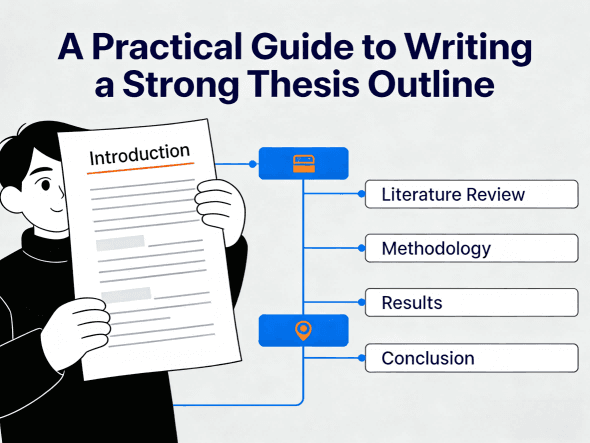
A well-organized essay guides your reader logically from point to point. A standard structure includes:
- Introduction: Hook, artwork background, thesis statement
- Body Paragraphs: Each focused on one idea (formal analysis, context, symbolism, etc.)
- Conclusion: Synthesis of insights, restating the significance of your interpretation
Example Flow:
Start with the artwork’s striking visual detail → analyze its formal properties → connect them to the cultural context → explain how all of this supports your thesis.
8. Revise with Clarity and Depth in Mind
Great art essays are revised, not simply written. Ask yourself:
- Is my argument clear and well-supported?
- Did I avoid pure description without analysis?
- Does every paragraph connect back to the thesis?
- Would a reader unfamiliar with the artwork understand my points?
By following these steps—observing, researching, interpreting, arguing, and structuring—you’ll develop an art essay that is analytical, insightful, and persuasive.
Check, Revise, and Polish Your Essay
Even the strongest ideas can be weakened by unclear writing or overlooked mistakes. Before finalizing your art essay, take time to refine it:
- Check for accuracy: Ensure that artist names, dates, artwork titles, and historical details are correct.
- Review clarity: Each paragraph should support your argument and follow a logical flow. Remove vague interpretations that are not backed by evidence.
- Strengthen your analysis: Confirm that every claim is supported by specific visual details or research, not general statements.
- Polish your writing: Look for overly long sentences, awkward phrasing, or grammar mistakes. Reading your essay aloud is a quick way to locate unclear spots.
- Ensure formatting consistency: Titles, citations, and artwork references should follow the style your assignment requires (MLA, APA, Chicago, etc.).
A well-polished essay not only reflects deeper understanding but also shows professionalism and academic rigor—both of which elevate your final work.
Essential Writing Techniques
Once you understand the steps of analyzing an artwork, the next challenge is expressing your ideas with clarity and sophistication. Strong art essays are not only insightful—they. They are readable, persuasive, and grounded in evidence. This section introduces the techniques that elevate your writing from descriptive to analytical, helping you craft arguments that resonate with academic and professional audiences.
1. Developing a Strong and Insightful Thesis Statement
Your thesis is the intellectual core of your essay—everything else exists to support it. A strong thesis must be specific, debatable, and rooted in visual evidence.
Craft a Debatable Claim
Avoid statements of fact or simple description. Instead, aim for a claim that invites interpretation.
For example:
Weak: “This sculpture uses marble.”
Strong: “The polished marble surface in Bernini’s Apollo and Daphne heightens the tension between movement and permanence, capturing the myth’s psychological transformation.”
Anchor Your Thesis in the Artwork
Before finalizing your thesis, ensure that every part of your claim can be supported by visual details—color, gesture, texture, composition, and material choices.
Connect to Context
A refined thesis often draws connections between the artwork and the artist’s historical, cultural, or personal context. This broadens your argument and shows deeper critical engagement.
2. Mastering Formal Analysis Techniques
Formal analysis is the foundation of art writing. It provides the “evidence” that supports your interpretations and arguments.
Analyze Key Visual Elements
- Color: Note hue, saturation, emotional impact, symbolism.
- Line: Observe direction, movement, tension, or calmness they create.
- Light & Shadow: Identify sources, contrast, atmosphere, or dramatic effects.
- Texture: Is it smooth, rough, layered? How does this affect meaning?
Examine Composition Principles
- Balance: Symmetrical, asymmetrical, or intentionally unbalanced?
- Focal Point: What draws your attention first—and how?
- Movement: How does your eye travel across the work?
- Scale & Proportion: What message does size communicate?
Consider Material and Technique
The medium is part of the meaning. Thick impasto implies energy; marble implies permanence; watercolor suggests delicacy. Technique reinforces emotion and theme.
3. Integrating Visual Evidence Smoothly into Your Analysis
Great art essays weave visual observation and argument seamlessly—not as two separate parts, but as one integrated discussion.
Select the Most Relevant Details
Choose only the visual details that support your argument. Irrelevant descriptions weaken your analysis.
Write Purposeful, Vivid Descriptions
Use precise verbs and adjectives that communicate what you see—and how it matters:
Example: “The jagged, overlapping brushstrokes slash across the canvas, mirroring the emotional turmoil depicted.”
Link Every Piece of Evidence Back to Your Argument
After presenting a detail, explain its significance. Use phrases like:
- “This suggests that…”
- “This reinforces the idea that…”
- “This visual tension supports the claim that…”
4. Strengthening Argumentation and Critical Thinking
Beyond describing what you see, strong art writing demonstrates how you think. Your argument should unfold logically, step by step.
Build Logical Progression
Use transitions to guide readers: “Similarly,” “In contrast,” “As a result,” “This reveals…”
Each paragraph should advance your thesis, not simply add information.
Engage with Art Theory Thoughtfully
Apply relevant theoretical perspectives when appropriate—feminist theory, postcolonial theory, psychoanalysis, material culture, semiotics. You don’t need deep expertise; simple, accurate application shows sophistication.
Develop Your Own Insight
After research, ask: “What do I notice that others haven’t emphasized?”
Your unique interpretation is what makes the essay valuable.
5. Techniques for Writing About Abstract Art
Abstract art requires a shift in approach—from representation to experience, interaction, and visual effect.
Move Beyond Literal Meaning
Instead of asking “What is it?”, ask “How does it work?” or “What does it evoke?”
Analyze Non-Figurative Elements
- Color fields and emotional resonance (Rothko)
- Gestural energy and process (Pollock)
- Geometric relationships and order (Mondrian)
Search for Concept and Intent
Abstract meaning often lies in process, theory, or the artist’s philosophy. Include this context when interpreting.
6. Common Writing Mistakes to Avoid
- Pure description without analysis: Always explain “why it matters.”
- Vague or weak thesis: Make it specific, arguable, evidence-based.
- Poor evidence use: Don’t list details; connect them to claims.
- Overload of context: Use historical info only when relevant to interpretation.
7. Applying Contemporary Art Theory
For advanced essays, apply conceptual frameworks:
- Feminist theory: Representation of gender, power, gaze.
- Postcolonial theory: Identity, cultural narrative, hybridity.
- Queer theory: Non-normative identity and form.
- Postmodernism: Appropriation, fragmentation, irony.
8. Linking Art Essay Skills to Curation and Professional Writing
Your analytical writing ability directly translates to professional practice:
- Exhibition catalog writing: Persuasive, narrative-driven analysis.
- Curatorial statements: Building conceptual unity through writing.
- Art criticism: Presenting timely, insightful evaluations.
Mastering the art essay no longer has to feel overwhelming. By applying the structured writing and analysis techniques outlined in this guide, you now have the tools to dissect artworks thoughtfully and express your insights with confidence. You’ve learned how to craft compelling theses, support your arguments with strong evidence, and communicate your ideas clearly and persuasively.
Ready to transform these skills into a polished essay? Don’t let the blank page hold you back. EssayPass offers a specialized AI essay writer designed to help you refine your ideas, organize your arguments, and produce a high-quality art essay with ease. Start creating your masterpiece today and experience how seamless, effective essay writing can be.