
A book review is your thoughtful response to a book—a blend of summary, evaluation, and personal insight. In it, you discuss the book’s strengths (or weaknesses), the thoughts it sparked in you, and whether it’s worth reading for others.
But writing a book review is no easy task.
What should you review? Simply summarizing the plot? How do you express genuine opinions without sounding harsh or unprofessional?
Finding a balance between “objective commentary” and “personal feelings” often makes the first paragraph the most challenging part.
This guide will lead you through the entire writing process
—from identifying the key points to focus on while reading, to constructing your arguments, and finally, writing a clear, insightful, confident, and practical book review.
Let’s transform writing anxiety into a simple plan and start creating a book review you can be proud of!
What is a Book Review?
A book review describes and evaluates a book, combining summary with critical analysis. It highlights the book’s main content, examines its strengths and weaknesses, and often provides a recommendation for potential readers. A good review typically includes a concise summary of the plot and themes, a critical assessment of writing, characters, and structure, and a final judgment on whether the book is effective or worth reading.
Why Write a Book Review?
Writing book reviews helps improve your writing and analytical skills while giving you insight into the publishing process. Reviews can influence libraries, readers, and the broader academic or literary community. Although they may not carry as much weight on a CV as academic essays, reviews can still advance your field and establish your presence as a thoughtful reader and critic.
Types of Book Reviews
There are two main approaches to reviewing a book:
Descriptive Review
This type focuses on presenting the content and structure of a book objectively. It highlights the book’s purpose, key themes, and intended audience, often including quotes or passages that illustrate essential points. The goal is to inform the reader about what the book contains without strong personal judgment.
Critical Review
This type evaluates the book against literary or scholarly standards, using evidence from the text and, where appropriate, comparisons to other works. A critical review assesses how well the author achieves their objectives and supports opinions with examples. This approach is most commonly required for course assignments or professional reviews.
Book Review vs Summary vs Book Report
Book reviews evaluate a book’s content and meaning. Summaries describe main points or events. Book reports give an overview of plot, characters, and ideas, often for school assignments.
| Feature | Book Review | Summary | Book Report |
|---|---|---|---|
| Goal | Evaluate effectiveness and meaning | Describe main points or events | Describe events, characters, and main ideas |
| Voice | Opinion supported by evidence | Neutral | Mostly neutral, sometimes personal reaction |
| Evidence | Quotes, themes, style, characters | Key points, events | Plot points, character descriptions, main ideas |
| Use | Guide readers and provide evaluation | Quick understanding of content | School assignments, demonstrate comprehension |
| Typical Length | 500–750+ words | Short, 100–300 words | 250–500 words |
Essential Elements of a Book Review
A strong book review combines summary, evaluation, and recommendation. It should give readers enough information to understand the book’s content and quality while offering your informed perspective.
Bibliographic Information
Start with the basic details: title, author, genre, publisher, year, and page count. Mention awards or series if relevant to help readers locate the exact edition.
- Title & Author: The Green Door (2019, River Press) by Maria Holt
- Genre: Mystery; Audience: Young Adult
- Length: 320 pages; ISBN: 978-1-2345-6789-0
Concise Summary
Briefly describe the main points, topic, or plot (3–5 sentences). Focus on central characters, goals, conflicts, and stakes. Avoid spoilers unless clearly marked.
Critical Assessment & Analysis
Evaluate the book’s effectiveness by examining the plot, characters, writing style, themes, and literary devices. Go beyond summary by analyzing content and placing the book in context, possibly comparing it to similar works. Support your opinions with evidence from the text.
Scope, Purpose, and Content
Identify the book’s overarching subject area and the author’s particular point of view (thesis). If unclear, create a concise statement reflecting the book’s material. Consider the following when analyzing scope and purpose:
- Examine the table of contents to see how the book is organized and how main ideas are developed.
- Why did the author choose this subject? From what perspective is it written?
- What is the general field or genre, and how does the book fit within it?
- Who is the intended audience?
- What is the author’s writing style? Evaluate coherence, clarity, originality, conciseness, and narrative flow.
- How did the book affect you? Did it change, reinforce, or challenge your assumptions? How does it connect to your own experiences or beliefs?
- Assess how well the book achieved its stated goals.
- Would you recommend this book to others? Explain why or why not.
Recommendation
Conclude by suggesting who would enjoy the book and why. Your recommendation helps readers decide if it’s worth their time.
Before You Write a Book Review
Writing a good book review requires preparation. The following steps help you select the right book, read actively, and plan your review effectively.
Choosing a Book
Pick a book that will be useful for your research, publication, or coursework. Ideally, choose a book that benefits you twice: as research and as a potential publication. Consider reviewing textbooks or anthologies if you are a graduate student, as these are easier to handle. You can also review two or more related books in a review essay.
When selecting a book, make sure it:
- Is in your field of expertise.
- Matches a topic you have sound background knowledge in.
- Was published in the last 2–3 years.
- Comes from a reputable publisher (university press or major commercial press).
Books on trending topics or useful but lesser-known works can be especially interesting. Avoid reviewing books by close colleagues or personal relations.
Tips to find a suitable book:
- Use your library’s call number system to find related books on the shelves.
- Search book databases like WorldCat, Amazon, or the Library of Congress using relevant keywords.
- Check pre-publication review magazines (e.g., Choice, Library Journal, Kirkus Reviews).
- Look at academic journals that list recently received or published books.
- Ask faculty or advisors for recommendations.
- Skim several candidates and select the strongest book without major flaws or disagreements.
Choosing a Journal
Identify journals in your field that publish book reviews. Use online databases or resources like Book Review Digest to find where similar reviews are published.
Before writing, contact the book review editor to confirm:
- If the journal accepts unsolicited reviews.
- Whether the specific book you want to review is available or already assigned.
- Any submission guidelines or word limits.
This contact may also help you obtain a free review copy. Make sure to deliver the review if a free copy is provided.
Reading the Book
Be an active reader. Take notes with pen and paper, summarizing arguments, highlighting key points, and noting your responses. Pay attention to:
- The title, table of contents, preface, and index.
- The book’s main argument and objectives.
- Its contribution to the field or relation to current debates.
- The author’s style, clarity, and use of technical terms.
- Accuracy of information (footnotes, bibliography, dates).
- Illustrations or examples and their usefulness.
- Who would benefit from reading this book and how it compares to others.
- Contextual information about the author (previous works, academic history).
Making a Plan
Book reviews are usually 600–2,000 words; aim for ~1,000 words. Plan your time:
- Two weeks reading the book.
- One week outlining your review.
- One week writing and revising.
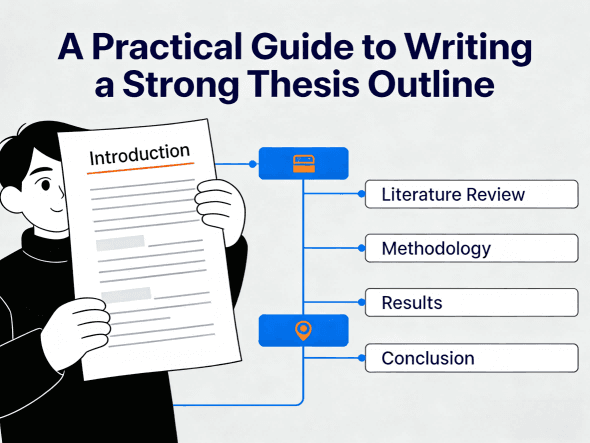
Outline structure:
- Title including full bibliographic information (author, publisher, year, edition, pages, ISBN).
- One paragraph stating the book’s thesis and whether it achieves its purpose.
- One or two paragraphs summarizing the book.
- One paragraph on the book’s strengths.
- One paragraph on weaknesses.
- One paragraph assessing overall quality and recommendation.
How to Write a Book Review
Writing a book review involves careful organization, critical analysis, and effective presentation of evidence. Follow these steps to structure and craft your review.
1. Plan Your Structure
Decide on a clear organizational framework before drafting. Common approaches include:
Introduction–Body–Conclusion
A classic structure mirrors an argumentative essay:
- Introduction: Hook + context + thesis (main judgment).
- Body: 2–4 focused paragraphs, each addressing one idea (theme, character, style, pacing) with evidence.
- Conclusion: Summarize key points, restate thesis in fresh words, and suggest the ideal audience.
Thematic or Comparative Organization
Alternatively, group your analysis by theme (e.g., identity, justice) or compare with similar works. Choose one approach and maintain consistency throughout your review.
2. Analyze the Book
Deep analysis is central to a meaningful book review. Focus on:
Identifying Central Ideas
Look for recurring problems, lessons, or questions. Determine the strongest themes as your main claim.
Assessing Characters and Plot
Examine whether characters have clear goals and growth. Evaluate the plot’s coherence, pacing, and cause-and-effect logic. Use examples to illustrate points.
Recognizing Key Themes
Highlight significant ideas (power, identity, family) and discuss how they develop throughout the story.
Judging Author’s Execution
Assess if the author achieved their goals and whether the book meets audience expectations. Use Point–Evidence–Explanation to support your judgment.
Evaluating Style and Language
Consider voice, tone, imagery, dialogue, narrator reliability, and appropriateness of language. Connect observations to specific text examples.
3. Draft Your Review
Create an outline to organize your points logically:
- Hook + thesis
- Brief plot summary
- Key themes
- Character analysis
- Style and pacing
- Conclusion + recommendation
Write your first draft freely without over-editing. Focus on flow, then revise for clarity, coherence, and evidence integration.
4. Craft a Strong Introduction and Conclusion
Creating a Hook
Use a question, anecdote, or bold statement to engage the reader and provide context.
Presenting Your Thesis
State a concise, debatable judgment about the book. Example: “Although the pacing lags, the novel succeeds due to authentic character growth.”
Delivering a Strong Closing
Restate your thesis in fresh words, summarize key points, and indicate the ideal audience. Avoid introducing new plot details.
5. Use Evidence Effectively
Selecting Quotes and Examples
Choose short quotes and relevant scenes that support your analysis. One per paragraph is usually sufficient.
Linking Evidence to Analysis
Use the “quote sandwich”: introduce the quote, present it, and then explain its significance and relation to your claim or theme.
Example Book Review: To Kill a Mockingbird by Harper Lee
Introduction
Harper Lee’s To Kill a Mockingbird explores themes of racial injustice, moral growth, and empathy through the eyes of young Scout Finch. While the novel is set in the 1930s American South, its lessons remain strikingly relevant today. Although the pacing occasionally slows in descriptive passages, the novel succeeds in portraying authentic character development and societal critique. This review will examine the book’s plot, characters, themes, and style, and provide guidance on its readership.
Body: Plot Overview
The story follows Scout and her brother Jem as they navigate childhood in Maycomb, Alabama, witnessing their father, Atticus Finch, defend an innocent Black man, Tom Robinson, accused of rape. The novel interweaves Scout’s personal growth with broader social commentary, balancing moments of warmth, humor, and tension.
Body: Character Analysis
Atticus Finch stands out as a moral compass, demonstrating integrity and courage. Scout’s perspective allows readers to experience a nuanced understanding of prejudice and empathy. Secondary characters, such as Boo Radley, enrich the narrative by highlighting societal fears and misconceptions. For example, Scout reflects, “Atticus, he was real nice,” illustrating her evolving understanding of human complexity.
Body: Themes and Style
The novel tackles profound themes, including racial injustice, moral conscience, and the loss of innocence. Harper Lee’s style combines vivid imagery with clear, accessible language, making complex issues understandable without oversimplification. The narrative voice, rooted in Scout’s perspective, effectively conveys both innocence and insight, allowing readers to engage with the social critique on multiple levels.
Conclusion
Overall, To Kill a Mockingbird succeeds in blending compelling storytelling with meaningful social commentary. Its enduring relevance and richly drawn characters make it an essential read for students, educators, and anyone interested in understanding moral and societal dynamics. Highly recommended for readers seeking both literary quality and thought-provoking themes.
Common Mistakes and Practical Tips
| Common Mistake | Practical Tip |
|---|---|
| Overgeneralizing opinions (e.g., “It was good” or “I liked it”). | Use precise observations: identify specific scenes, quotes, or character actions that support your evaluation. |
| Focusing only on plot summary without critical insight. | Always connect events to themes, character development, or author’s purpose. Ask yourself: “Why does this matter?” |
| Ignoring the book’s context or genre conventions. | Briefly mention how the book fits its genre or field, and compare with similar works to provide context for your assessment. |
| Failing to address target audience or relevance. | Clarify who will benefit from reading this book and why, connecting your review to potential readers’ interests. |
| Evaluating without acknowledging both strengths and weaknesses. | Balance criticism and praise. Highlight notable achievements alongside areas for improvement. |
| Neglecting the author’s purpose or thesis. | Identify the author’s main argument or goal and assess how effectively it is achieved. |
| Overloading with minor details or tangents. | Focus on key elements that support your evaluation; remove irrelevant plot points or excessive description. |
| Weak closing that doesn’t guide the reader. | End with a concise summary of your judgment and a clear recommendation for the intended audience. |
Conclusion
Writing a compelling book review is both an analytical exercise and a creative process. By planning your structure, analyzing themes and characters, supporting your evaluation with evidence, and refining your draft, you can craft reviews that are insightful, balanced, and engaging.
Your perspective matters. Instead of simply summarizing, focus on thoughtful critique, clear reasoning, and guidance for potential readers.
Need extra support? EssayPass’s AI writing tool can help you organize your ideas, polish your arguments, and elevate your book review. Start drafting today and make your evaluation informative, persuasive, and distinctive.