
A research paper is a formal academic document that presents a clearly defined question, a reasoned argument, and evidence-based analysis. Its purpose is to contribute to existing scholarship by demonstrating your ability to investigate a topic, interpret sources critically, and communicate findings with precision.

Students often struggle to narrow a broad topic, formulate a focused thesis, or organize extensive readings into a coherent argument.
Even with substantial research, transforming notes into a structured, persuasive paper frequently feels overwhelming.
This guide aims to reduce that complexity. It outlines the essential stages of the research-writing process:
From selecting an appropriate research question to drafting, revising, and strengthening your final argument.
By approaching each step methodically, you can develop a paper that is clear, analytically rigorous, and academically sound.
What Is a Research Paper?
A research paper is a formal scholarly document that investigates a specific question through systematic inquiry, critical evaluation of evidence, and the development of a well-supported argument. Its purpose is not only to summarize existing knowledge but to engage with it analytically—identifying patterns, questioning assumptions, and situating your position within a wider academic conversation.
What distinguishes a research paper is its reliance on rigorous methodology and source-based reasoning. Writers are expected to consult multiple credible sources, synthesize diverse perspectives, and construct an argument that contributes meaningfully to ongoing scholarly debates. This makes the research paper an essential tool for generating, validating, and communicating academic knowledge.
Key Characteristics of a Research Paper
- Evidence-driven: Research papers are grounded in verifiable data, empirical findings, and credible scholarly sources. Arguments must be supported by facts rather than personal opinion.
- Argument-centered: At its core, a research paper advances a clear, research-informed thesis. The goal is not only to present information but to interpret it and develop a position within existing scholarship.
- Comprehensive in scope: Unlike shorter academic essays, research papers demonstrate subject-matter expertise through in-depth analysis, integration of diverse sources, and engagement with complex debates.
- Formally structured: Most disciplines require a standardized format—such as introduction, literature review, methodology, analysis, results, and conclusion—ensuring clarity, transparency, and reproducibility.
- Scholarly contribution: A research paper aims to extend, refine, or challenge current knowledge. The author is expected to offer insights, interpretations, or findings that deepen understanding of the subject.
- Objective in tone: Research papers adopt an analytical, neutral, and precise style, minimizing personal bias and emphasizing logical reasoning and evidence-based conclusions.
- Source-integrative: Beyond simply citing references, a strong research paper synthesizes multiple perspectives, evaluates their reliability, and situates the argument within broader academic discourse.
Research Papers vs. Academic Essays
Although both forms require clear argumentation, they differ significantly in purpose, depth, and research expectations:
| Academic Essay | Research Paper |
|---|---|
| Presents and defends an argument based on interpretation or reasoning. | Develops an argument grounded in extensive research and scholarly evidence. |
| Typically shorter and more focused on analysis of a given prompt. | Longer, more detailed, requires independent inquiry and synthesis of multiple sources. |
| Uses sources to support ideas, but scope is limited. | Engages in a structured literature review and situates claims within a broader scholarly context. |
| Emphasis on critical thinking and argument clarity. | Emphasis on research design, evidence evaluation, and contribution to academic discourse. |
In short, while an academic essay interprets, a research paper investigates. The former demonstrates your ability to argue; the latter demonstrates your ability to conduct scholarly research, analyze complex information, and advance knowledge in your field.
Components and Format of a Research Paper
A research paper follows a standardized structure designed to present an investigation clearly, logically, and academically. While formatting details vary by discipline or instructor, most papers include the core components below.
Key components
1. Title and Abstract
Title: Concise and precise, signaling the study’s focus.
Abstract: A brief (150–250 words) overview that states the research problem, methods, key findings, and main implications.
2. Introduction
The introduction establishes context: background, the research problem, the purpose of the study, and the research questions or hypotheses. It may also define key terms, state assumptions, and outline the study’s scope (limitations and delimitations).
3. Literature Review
This section synthesizes existing scholarship, identifies debates, and highlights gaps the current study addresses. Use subheadings to organize themes or methodological traditions and show how prior studies lead to your research question.
4. Methodology
Detail how the study was conducted so others can replicate it: data sources, sampling procedures, instruments, data-collection steps, and analytic techniques (e.g., coding procedures, statistical tests, software). Use future tense for proposals and past tense for completed studies.
5. Results
Present findings objectively, typically organized around the research questions or hypotheses. Use tables and figures to display data clearly; include concise captions and label tables/figures as Table 1, Figure 1, etc.
6. Discussion
Interpret the results, relate them to the literature, explain their significance, and address unexpected outcomes. Demonstrate how the findings contribute to the field and what they imply for theory or practice.
7. Conclusion
Summarize the study’s main insight, revisit the research purpose, and suggest implications, limitations, and directions for future research.
8. References
List all cited sources on a new page using a consistent citation style (APA, MLA, Chicago, or discipline-specific format). Use hanging indents and check each reference for completeness.
Research Paper Layout Summary Table
| Section | Formatting & Layout Rules | Purpose in the Paper |
|---|---|---|
| Title Page |
| Provides formal publication details and a clear entry point for readers. |
| Abstract |
| Offers a concise summary of question, methods, results, and significance for quick appraisal. |
| Main Headings |
| Creates clear structural divisions to guide the reader through the study’s logic. |
| Subheadings |
| Organizes detailed methods or results and improves navigability. |
| Research Questions / Hypotheses |
| Frames the analysis and links introduction to methods and results. |
| Tables & Figures |
| Presents empirical evidence visually to support results and facilitate interpretation. |
| References |
| Documents sources, ensures reproducibility, and situates the study in existing scholarship. |
How to Write a Research Paper
Writing a research paper involves a systematic process of inquiry, argumentation, and revision. Below is a concise, methodical workflow you can follow to produce a clear, rigorous, and well-argued paper.
1. Understand the Assignment
- Clarify purpose, scope, length, citation style, and submission format.
- Resolve ambiguities with the instructor and break requirements into actionable checkpoints.
- Plan a realistic schedule allocating time for research, drafting, and revision.
2. Choose and Refine a Topic
Select a topic that is manageable, researchable, and meaningful.
- Brainstorm, consult recent literature, and discuss ideas with peers or instructors.
- Narrow broad subjects into specific, arguable angles that allow depth.
- Example: instead of “World War II,” investigate “cultural identity among Danish border communities during WWII.”
3. Conduct Preliminary Research
- Survey books, peer-reviewed articles, and authoritative sources to map the scholarly conversation.
- Identify debates, contradictions, gaps, and recent developments relevant to your topic.
- Draft preliminary research questions (e.g., “I want to know how/why/what…”).
4. Develop a Clear Thesis Statement
Your thesis should be concise, argument-driven, and coherent:
- One or two focused sentences that assert a claim requiring evidence.
- Use the thesis as the organizing principle; revise it as research proceeds.
5. Create a Structured Outline
Outline the paper’s major sections and the key points/evidence for each:
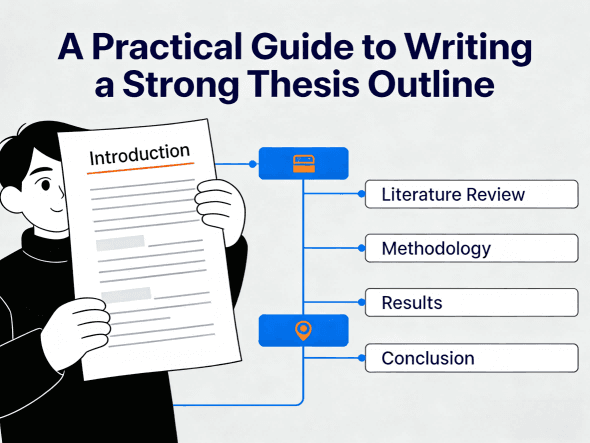
- Typical sections: Introduction → Literature Review → Methods → Results → Discussion → Conclusion.
- List topic sentences, supporting evidence, and primary sources under each heading.
- Keep the outline flexible—reorganize as your argument develops.
6. Write the First Draft
- Prioritize generating content and maintaining momentum over perfection.
- Follow the outline but allow ideas to shift; write the most comfortable sections first.
- Preserve deleted text in a separate file rather than discarding it.
7. Strengthen the Body
- Ensure each paragraph advances a single analytic idea tied to the thesis.
- Use clear topic sentences and smooth transitions; arrange paragraphs logically (chronology, complexity, thematic progression).
- Avoid repetition—make sure adjacent paragraphs offer distinct contributions.
8. Craft Introduction and Conclusion
Introduction should answer:
- What is the topic (with necessary background and definitions)?
- Why does it matter (the contribution or gap you address)?
- How will you proceed (a brief roadmap of sections)?
Conclusion should:
- Summarize how the paper resolves the issue posed in the introduction.
- Highlight broader implications, limitations, and possible directions for future research.
- Avoid introducing new evidence or extended arguments.
9. Revise, Edit, and Proofread
Two revision levels are essential:
Global Revision
- Check overall structure, coherence, and alignment with the thesis and assignment.
- Reorganize or cut sections that do not contribute to the argument; expand underdeveloped points.
Local Revision
- Refine sentence clarity, grammatical correctness, and concision.
- Verify citations, reference list accuracy, and formatting consistency (APA/MLA/Chicago).
- Repeat revision cycles until argumentation and presentation are precise.
Following this methodical process—clarifying the task, selecting a viable topic, grounding your claim in literature, drafting with an outline, and revising at both the macro and micro levels—will help you produce a rigorous, persuasive research paper.
Research Paper Writing Techniques
1. Conducting an Effective Literature Review
A high-quality literature review does more than summarize prior work—it establishes the intellectual landscape of the field and positions your study within it.
Locating and Evaluating Scholarly Sources
- Prioritize academic databases (Google Scholar, JSTOR, Scopus, PubMed, ERIC).
- Evaluate each source using established criteria such as currency, relevance, authority, accuracy, and purpose.
- Maintain an organized note-tracking system to group literature by theme, debate, or methodology.
Identifying Research Gaps
- Gaps often appear through conflicting findings, outdated evidence, understudied populations or contexts, or methods not yet applied to the topic.
- Review the “Limitations” and “Future Research” sections of articles for rapid gap detection.
Developing a Theoretical Framework
A theoretical framework clarifies how concepts relate to the research question and guides methodological choices.
- Define all key constructs.
- Select theories aligned with your research purpose.
- Explain the mechanism through which theory informs analysis.
2. Designing Research Methods and Collecting Data
Methodological choices must logically follow from the research question.
Selecting Quantitative, Qualitative, or Mixed Approaches
| Approach | Focus | Data | Best For |
|---|---|---|---|
| Quantitative | Numbers and measures | Surveys, experiments, datasets | “How many?” or “What is the effect?” |
| Qualitative | Meanings and experiences | Interviews, focus groups, texts | “Why?” and “How?” |
| Mixed Methods | Both numbers and meanings | Combined datasets | Complex questions |
Ensuring Validity, Reliability, and Ethical Integrity
- Use clearly defined instruments and standardized procedures.
- Document methodological steps to ensure replicability.
- Protect participants’ privacy, obtain consent, and follow institutional ethics protocols.
3. Using Citations and Academic Styles Properly
Applying APA, MLA, or Chicago
Each style governs formatting, in-text citations, and reference lists—choose the style appropriate for the discipline or instructor.
Ensuring Citation Accuracy and Avoiding Plagiarism
- Paraphrase meaningfully and cite consistently.
- Use quotations sparingly.
- Verify that every in-text citation appears in the reference list.
4. Time Management and Maintaining Writing Momentum
Break the process into small, sequential tasks and set specific milestones. Use brief writing sessions to maintain progress and reduce cognitive load.
5. Preparing for Submission or Publication
- Ensure full compliance with style guidelines.
- Verify that tables, figures, and references are correctly formatted.
- Conduct a final read-through for accuracy and flow.
- When responding to reviewer feedback, address each point systematically with clarity and professionalism.
Crafting a strong research paper is more than completing an assignment.
It’s about exploring your topic thoroughly, presenting a clear argument, and communicating your unique perspective with confidence.
By following the strategies in this guide—from developing a focused thesis to mastering citations—you are well on your way to producing work that is insightful, organized, and impactful.
If time is tight or you need a helping hand, EssayPass can support you every step of the way. Our advanced AI essay writer helps you overcome writer’s block, refine your arguments, and polish your draft to professional quality. With EssayPass, your next research paper can be your most compelling yet.