
Analysis Essay are a type of academic writing that requires you to delve into the essence of things.

It’s not about restating events, but about elucidating their significance and deeper meaning.
However, many students get stuck here.
You start writing, only to find yourself merely summarizing.
Your thoughts become disorganized, your arguments vague, and the pressure mounts as you stare at the blank page.
If you’ve had similar experiences, you’re not alone—Analysis essays are indeed difficult to write before mastering the writing methods.
This guide walks you through the writing process, helping you analyze clearly and write effective Analysis essays.
Understanding Analysis essays
To write an effective analysis essay, you first need a solid understanding of what this type of essay actually is.
An analysis essay is a form of academic writing that examines a subject in depth by breaking it into meaningful parts and evaluating how those parts work together. Instead of retelling events or repeating what a text says, you investigate patterns, techniques, relationships, and deeper implications.
This type of essay can analyze almost anything—literature, films, historical events, scientific findings, political speeches, artistic choices, or even social trends. The goal is not to summarize the content, but to interpret it. For instance, when analyzing a short story, you’re not recounting the plot; you’re exploring how symbolism, narrative structure, or character choices shape the story’s central message.
Key Purpose and Primary Goals
The core purpose of an analysis essay is to help readers understand how something works and why it carries meaning. Rather than presenting personal opinions, you support a clear, logical argument using evidence from the subject itself. Good analytical writing aims to:
- interpret the deeper meaning behind ideas, techniques, or patterns
- connect individual elements to the larger theme or argument
- explain the mechanisms that create meaning, emotion, or impact
- present a reasoned perspective supported by evidence, not emotion
In other words, an analysis essay moves beyond “what happens” to explain “how it works” and “why it matters.”
Analysis vs. Description
A common misconception is that analysis is just detailed description. In reality, the two forms serve very different academic purposes.
Description tells the reader what is there.
Descriptive essays aim to “describe”—what something looks like, what occurred, or what the author said. Their focus is accuracy and observation.
Analysis tells the reader what it means.
Analysis essays aim to “interpret”—how the parts function, why certain choices matter, and what meaning or insight can be drawn from them.
Understanding this difference is crucial. If your essay stops at describing plot points, listing features, or restating details, you are not analyzing. True analysis always moves one step deeper, revealing connections, consequences, and interpretations supported by evidence.
When to Write an Analysis essay
Analysis essays are used in far more situations than students initially expect. You’ll encounter them across academic subjects whenever the goal is to interpret, evaluate, or uncover meaning—not simply report information.
You should use an analytical approach when your assignment asks you to:
- Examine how something works
For example, analyzing how a film uses lighting to build suspense or how a scientific study structures its methodology.
- Interpret deeper meaning or themes
Common in literature, art, history, psychology, and media studies, where the focus is on uncovering symbolism, motives, or implications.
- Evaluate techniques, strategies, or decisions
Such as analyzing a political speech, a marketing campaign, a legal argument, or the effectiveness of a public policy.
- Compare how different components contribute to a larger idea
For instance, exploring how character development, setting, and conflict all shape the theme of a novel.
- Break down complex issues or concepts
Useful in subjects like sociology, philosophy, or cultural studies, where ideas must be dissected to understand their influence or consequences.
In short, you use an analysis essay whenever the task requires you to dig beneath the surface—explaining how and why something works rather than simply stating what it is. If the assignment includes verbs like “analyze,” “examine,” “evaluate,” “interpret,” or “discuss,” an analysis essay is almost certainly the expected response.
How to Structure an Analysis Essay
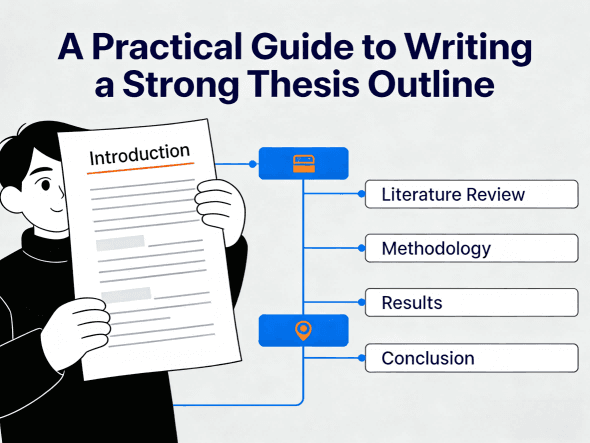
Effective analysis essays start with a clear structure. A well-organized framework guides the reader through your argument, enhances clarity, and strengthens your analysis. While topics and lengths may vary, most analysis essays share a basic structure: introduction, body, and conclusion.
Basic Essay Framework
Analysis essays follow a clear structure: introduction, body, and conclusion. Understanding each section and how it functions is essential for writing a coherent and persuasive essay.
Common Structural Patterns
Depending on the topic and essay length, you can choose different structures to organize your analysis:
Classic Five-Paragraph Essay
Ideal for shorter essays or beginners:
- Paragraph 1: Introduction with hook, context, and thesis
- Paragraphs 2-4: Body paragraphs, each covering a single supporting point
- Paragraph 5: Conclusion summarizing thesis and key arguments
This format ensures discipline, focus, and clarity.
Thematic or Conceptual Organization
For more complex topics, organize your essay around themes, ideas, or concepts rather than a fixed number of paragraphs. For instance, analyzing a social movement could involve sections on its ideological roots, strategies, and cultural impact. This method allows a more nuanced exploration where ideas dictate the flow.
Detailed Steps for Writing an Analysis Essay
Writing an analysis essay is a process of careful thinking, research, and structured expression. By following these steps, you can move from uncertainty to a polished essay that presents a clear, evidence-based argument.
1. Decide on Your Stance
Before writing, determine your viewpoint on the topic. This will shape your thesis and the direction of your analysis.
Example: Suppose your topic is the benefits and drawbacks of remote work. Ask yourself:
- Do you think remote work improves flexibility and work-life balance?
- Or do you believe it causes isolation and reduced collaboration?
Consider evidence that supports each side, such as studies, statistics, or testimonials. Your stance will guide which evidence to prioritize in your essay.
2. Write a Strong Thesis Statement
Your thesis expresses your main argument. It should clearly reflect your stance and answer “how” or “why” questions.
Examples:
- Positive stance: “Remote work presents an opportunity for increased flexibility and work-life balance, benefiting both employees and employers in today’s interconnected world.”
- Critical stance: “While remote work offers flexibility, it can lead to isolation and collaboration challenges, requiring a balanced approach to its implementation.”
Tip: Keep refining your thesis as you gather more evidence; it can evolve with your analysis.
3. Conduct Research
Collect credible sources that provide evidence to support your thesis. Focus on quality over quantity.
- Academic journals, books, and reports are preferred.
- Highlight statistics, quotes, or examples that directly support your argument.
- Take organized notes to avoid losing track of sources.
Example: Research showing productivity improvements among remote workers supports a positive stance; surveys indicating employee isolation support a critical stance.
4. Create a Detailed Outline
Plan your essay structure to ensure a logical flow.
- Introduction: Hook, background, and thesis.
- Body Paragraphs: Each paragraph focuses on one argument or piece of evidence.
- Conclusion: Restate thesis, summarize key points, and provide insight.
Tip: Include mini notes under each paragraph with evidence and analysis points to make writing smoother.
5. Write the First Draft
Expand your outline into full paragraphs.
- Start each paragraph with a clear topic sentence.
- Integrate evidence using proper signal phrases and citations.
- Follow evidence with detailed analysis explaining its significance to your thesis.
Mini Example: “The use of telescreens in 1984 constantly reminds citizens of Big Brother’s surveillance (Orwell, 1949, p.5). This enforces conformity and suppresses personal freedom, demonstrating Orwell’s critique of authoritarianism.”
6. Revise for Coherence and Argument Strength
Review your draft critically.
- Does every paragraph support your thesis?
- Are transitions smooth between ideas?
- Is the evidence analyzed thoroughly rather than just summarized?
7. Proofread and Finalize
Check grammar, punctuation, formatting, and citation style. Make sure your essay is polished and professional.
- Read aloud to catch awkward phrasing.
- Verify all in-text citations match the reference list.
- Consider using tools but manually check for context accuracy.
Analysis Essay Writing Tips
Mastering analysis essays goes beyond following steps; it requires strategic thinking, precise evidence use, and clear argumentation. These tips, illustrated with examples, help you write essays that are persuasive and insightful.
1. Develop a Powerful Thesis Statement
Make a specific, arguable claim: Avoid vague statements.
- Weak → “Social media has both good and bad effects.”
- Strong → “While social media connects people globally, its algorithmic curation creates echo chambers that intensify political polarization.”
This makes the thesis narrow, debatable, and analytical.
Provide a roadmap: Hint at your argument structure.
- By examining unreliable narration, symbolic imagery, and fragmented timelines, this essay argues that the protagonist’s perceived madness reflects a rational response to trauma.
Position your thesis strategically: Typically at the end of the introduction to guide readers naturally into your argument.
2. Integrate Textual Evidence Effectively
Select relevant quotations: Use short, potent quotes.
- Instead of a long paragraph from a novel, choose a line that highlights character motivation and supports your claim.
Embed evidence properly: Introduce quotes with your own words.
- Weak: Hamlet is indecisive. “To be, or not to be: that is the question.”
- Strong: Hamlet’s contemplation of existence illustrates his paralyzing indecision: “To be, or not to be: that is the question.”
Connect evidence to analysis: Explain its significance.
- The quote above reflects Hamlet’s black-and-white thinking and inability to act pragmatically, reinforcing your thesis about his indecision.
3. Enhance Critical Thinking
Question assumptions: Identify implicit claims.
- An ad claims buying X product brings happiness → your analysis explores the societal values underlying this message.
Analyze multiple perspectives: Consider counterarguments.
- When arguing a policy was effective, also discuss groups who may have been disadvantaged.
Evaluate argument strength: Check reasoning and evidence.
- A statistic shows correlation but not causation; explain why this distinction matters.
4. Avoid Logical Fallacies
Be aware of pitfalls: Ad Hominem, Straw Man, Hasty Generalization, Post Hoc.
- Don’t dismiss a counterpoint by attacking the author; refute with evidence.
Strengthen causal reasoning: Look for mechanisms.
- Instead of “Sales rose because of the campaign,” write “Targeted marketing increased engagement, leading to a 40% sales rise.”
Build sound arguments: Each paragraph = claim + evidence + analysis.
- Topic sentence states a claim; evidence supports it; analysis explains how it proves your thesis.
5. Overcome Common Writing Challenges
Superficial analysis: Ask “why?” repeatedly.
- Character is angry → Why? Reveals societal pressures → So what? Demonstrates theme of oppression.
Complex ideas: Break into digestible parts.
- Use bullet points, analogies, or subheadings to clarify multi-layered arguments.
Contradictory evidence: Address openly.
- Evidence shows both positive and negative effects of remote work → explain nuances, don’t ignore the conflict.
6. Comparative and Advanced Analysis Frameworks
Point-by-point comparison: Alternate subjects per point.
- Compare two speeches: Pathos in speech A vs logos in speech B.
Block method: Discuss all aspects of one subject, then the other.
- Film A analysis → Film B analysis, same points in same order.
Lens or focal point analysis: Use one subject to examine the other.
- Apply feminist theory to analyze a contemporary film; structure essay around the lens.
Mastering the art of writing compelling Analysis Essays transforms how you engage with texts, ideas, and arguments. With the strategies covered in this guide, you now have the tools to deconstruct complex subjects, craft strong, precise theses, and present your insights with clarity and confidence.
To make the process even smoother and elevate your essays from good to exceptional, consider leveraging modern technology. EssayPass’s advanced AI essay writer can assist you in brainstorming ideas, structuring your paper, and refining your analysis. It saves time while enhancing the clarity and persuasiveness of your work.
Experience how effortless and effective crafting powerful Analysis Essays can be—try EssayPass today and take your writing to the next level.