
An article review is a critical assessment of a scholarly or professional article, where you summarize the key points, analyze the evidence, and evaluate the work’s overall contribution.
Many writers find this task intimidating.
It’s challenging to balance summary with critique, structure your thoughts clearly, and provide a persuasive evaluation.
Feeling stuck is normal—but that’s exactly why this guide exists.
Here, we’ll walk you through a step-by-step approach that makes writing an article review clear, manageable, and even rewarding.
Keep reading to master this essential skill.
What Is an Article Review?
An article review is a critical evaluation of another writer’s published work. It requires you to summarize the main points, analyze the author’s arguments and methodology, and provide an evidence-based assessment of the article’s strengths, weaknesses, and overall contribution.
To do this effectively, you must thoroughly understand the article—identify its key arguments, structure, and evidence—and present a fair, accurate judgment supported by references from the text. An article review is not merely a retelling of content; it is your informed, analytical response to how well the author communicates ideas, supports claims, and presents convincing conclusions.
Purpose and Audience
The purpose of an article review is to help readers understand both what the article argues and how effectively it argues it.
- Students use reviews to demonstrate comprehension and critical thinking.
- Researchers use them to assess new findings, methodologies, and scholarly contributions.
- Professionals rely on them to stay updated on developments in their field.
Your audience usually understands the general subject area but may not have read the specific article, making clarity, accuracy, and structure essential.
Article Review vs. Art Essay vs. Summary
| Item | Article Review | Art Essay | Summary |
|---|---|---|---|
| Core Purpose | Evaluate and analyze the quality and contribution of an article | Interpret and analyze an artwork, style, or theme | Condense and restate the main ideas of the original text |
| Requires Critical Analysis | ✔ Yes | ✔ Yes | ✘ No |
| Includes Personal Judgment | ✔ Required | ✔ Often | ✘ None |
| Content Scope | A single scholarly or professional article | An artwork or artistic phenomenon | Main ideas of the original text |
| Main Focus | Argument quality, evidence, methodology, logic | Artistic expression, techniques, cultural meaning | What the original text says |
| Final Output | Critical evaluation + summary | Interpretation and personal insight | Neutral, concise restatement |
Key Components and Structure of an Article Review
A strong article review consists of several essential components, arranged in a clear and logical structure. These elements help ensure your review is accurate, organized, and academically credible.
1. Introduction
- Provide the article’s full citation (author, title, publication).
- Introduce the topic and summarize the author’s central argument.
- Present your reviewing thesis—your overall evaluation of the article.
2. Summary
- Give a concise, objective overview of the article’s key points, arguments, and evidence.
- Avoid personal opinions in this section; focus on accuracy and clarity.
3. Critical Analysis
- Evaluate the article’s strengths and weaknesses.
- Assess evidence quality, methodology, logic, clarity, and organization.
- Support each judgment with specific quotes or examples from the article.
- Address the article’s relevance, contribution, or limitations within its field.
4. Conclusion
- Summarize your key critique points.
- Restate your overall evaluation of the article’s value or impact.
- Highlight its significance (or lack thereof) for the discipline.
Quick Checklist
- ✔ Citation complete and accurate
- ✔ Summary clear and objective
- ✔ Analysis balanced and evidence-based
- ✔ Arguments supported with examples
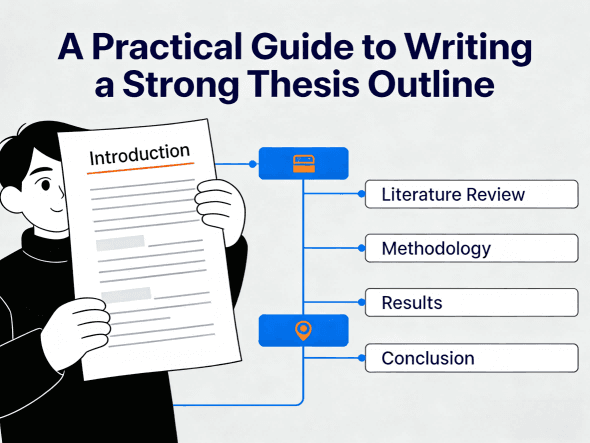
- ✔ Logical structure (Intro → Summary → Analysis → Conclusion)
- ✔ Proofread for clarity, coherence, and academic tone
Types and Formats of Article Reviews
Understanding the type of article review you are writing and the proper formatting is essential before you begin drafting. Different review types demand different approaches in tone, structure, and depth, and following correct citation standards ensures academic credibility.
Common Types of Article Reviews
1. Journal Article Review
This type focuses on published academic articles. Your goal is to evaluate the author’s claims, supporting evidence, methodology, and overall significance within the field. Key questions to guide your review include:
- What is the main argument or thesis?
- How is the argument supported and structured?
- Who benefits from this article, and why does it matter?
2. Research Article Review
This review examines original research studies. You analyze the study design, data collection, results, and conclusions. Critical evaluation includes:
- Assessing the reliability of methods and data presentation
- Identifying patterns, trends, or inconsistencies
- Determining whether the findings support the stated hypotheses
3. Science Article Review
Science reviews focus on technical experiments or scientific studies. The emphasis is on understanding methods, replicability, and the accuracy of results. Ask:
- Do the data and experiments support the author’s claims?
- Can someone replicate the study with similar results?
- Are complex procedures or figures explained clearly for the intended audience?
4. Critical Review
A critical review evaluates the article’s ideas while integrating your own perspective. You analyze, agree or disagree, and consider alternative interpretations. Strong critical reviews are:
- Analytical and evidence-based
- Clear in presenting your judgment
- Engaging and thoughtful, showing the depth of your evaluation
Formatting Your Review
Using the correct citation style depends on the type of article and the publication medium. Always check your assignment guidelines or journal requirements.
APA Style
- Web: Author, A.A. (Year, Month Day). Title. Retrieved from {URL}
- Journal: Author, A.A. (Year). Title of article. Journal Title, Volume(Issue), pp.-pp.
- Newspaper: Author, A.A. (Year, Month Day). Title of article. Newspaper Title, pp. xx-xx.
MLA Style
- Web: Last, First Middle Initial. “Title of Article.” Website Title, Publisher, Day Month Year Published. Web. Date Accessed.
- Journal: Last, First M. “Title of Article.” Journal Title, vol. X, no. X, Year, pp. xx-xx. Database. Web. Date Accessed.
- Newspaper: Last, First M. “Title of Article.” Newspaper Title [City], Day Month Year Published: pp. xx-xx. Print.
By understanding the type of review and adhering to proper formatting, you lay a strong foundation for writing an article review that is both credible and well-structured.
Preparation before writing
Before drafting your article review, taking time to prepare will help you understand the text more deeply and build a clear, confident foundation for your analysis. The following steps ensure that your review is informed, structured, and academically coherent.
1. Build a Clear Framework
A solid outline keeps your ideas organized and prevents your review from drifting into summary-only writing. Start with a simple structure, then refine it as your understanding of the article grows.
- Place your title and full citation at the top.
- Draft a brief introduction that identifies the article and its purpose.
- Reserve a section for summarizing the author’s main ideas.
- Create space for a detailed critical analysis.
- Leave room for a concluding evaluation of the article’s overall contribution.
- Prepare a reference list that follows your required citation format.
2. Read Actively With Guiding Questions
Effective reviewing starts with intentional reading. Instead of passively absorbing information, use targeted questions to uncover the article’s structure, logic, and purpose.
- What claim is the author trying to prove?
- What evidence, data, or theories support the argument?
- How is the article organized and why?
- Does the author maintain a particular tone, stance, or perspective?
- What assumptions does the author expect the reader to accept?
3. Create a Neutral Summary Draft
Before analyzing the article, ensure you can explain it clearly in your own words. This internal draft is not your final summary—it’s a working version that helps you clarify the core ideas without relying on the author’s language.
- Write a short, neutral summary using your own sentence patterns.
- Focus only on main arguments and essential evidence.
- Avoid minor details or extra examples.
- Note any unusual methods, findings, or assumptions.
- Keep the draft concise—no more than one-third of the original article.
4. Begin Preliminary Analysis
Once you understand the article, shift into critical thinking. This stage helps you identify what the author does well and where the article may fall short.
- Which parts of the argument are strong or well-supported?
- Where does the reasoning feel unclear, biased, or incomplete?
- Are the methods appropriate and transparently explained?
- How does this article compare to other work in the field?
- Who gains value from this article, and who might find it limited?
Preparing your foundation carefully sets the tone for a structured, analytical, and well-supported article review. Once your outline and notes are in place, you’re ready to move into the step-by-step writing process.
How to Write an Article Review
Once your preparation is complete, you can begin drafting your article review. The following steps guide you from choosing a title to refining your final draft, ensuring your review is structured, analytical, and academically sound.
1. Write the Title
Your title should clearly signal what the review is about and the angle of your evaluation. A strong title helps readers understand the scope and focus of your critique.
- Refer to the article’s title or central topic.
- Reflect your overall assessment or analytical focus.
- Keep it professional, concise, and specific.
2. Write the Abstract
An abstract (150–250 words) provides a quick overview of your entire review—its summary, analysis, and final evaluation. Although short, it should capture the essence of your critique.
- Introduce the article’s title, author, and purpose.
- Outline the scope of the article and your central evaluation.
- Highlight key strengths and weaknesses discussed in your review.
- Maintain an objective, neutral tone.
3. Write the Introduction
Your introduction sets the stage for the full review. It identifies the article and presents your main judgment clearly and directly.
- Provide the author’s name, article title, and publication source.
- Briefly explain the article’s subject, goal, or context.
- End with your reviewing thesis—your overall evaluation of the article.
4. Summarize the Article
The summary section demonstrates your understanding of the article. Keep it objective and focus on essential ideas rather than minor details.
- Identify the article’s central argument or purpose.
- Paraphrase key points, evidence, and supporting arguments.
- Avoid inserting your opinions or critique in this section.
- Keep the summary clear, accurate, and concise.
5. Critically Evaluate the Article
This is the core of your review. Your analysis should examine how effectively the author presents and supports their claims.
- Assess the clarity and strength of the argument.
- Evaluate the quality and relevance of the evidence.
- Identify any bias, assumptions, or gaps in reasoning.
- Consider the organization, tone, and logical flow.
- Support each point with specific examples or quotations.
6. Write the Conclusion
Your conclusion brings your analysis together and offers a final judgment on the article’s significance or impact.
- Restate your evaluation using fresh, concise wording.
- Summarize the major strengths and weaknesses.
- Comment on the article’s contribution or usefulness in its field.
7. Create a Proper Citation
Accurate citation strengthens your academic credibility. Include a complete reference to the article following the required citation style.
- Use APA, MLA, Chicago, or the assigned format.
- Include author name, title, source, date, and page numbers.
- Place the citation in the correct location based on style rules.
8. Proofread and Revise
Before submitting your review, refine your writing to ensure clarity, coherence, and accuracy.
- Check grammar, spelling, and punctuation.
- Ensure your ideas flow logically from section to section.
- Verify your tone is formal, academic, and objective.
- Confirm all citations and references are complete and correct.
Example of an Article Review
Seeing a real example helps clarify how an article review moves beyond mere summary to thoughtful analysis. The following example demonstrates structure, critique, and clear evaluation.
Title:
The Role of Social Media in Modern Political Movements
Author:
Dr. Elaine Porter
Published In:
Journal of Contemporary Media Studies
Reviewed by:
James Carter, Sociology Major
Introduction
Dr. Porter’s article examines how platforms such as Twitter and TikTok have transformed political activism, enabling faster organization and wider visibility for causes. This review evaluates the article’s argument, supporting evidence, and potential areas for improvement.
Summary
Porter identifies speed, reach, and visibility as the main mechanisms through which social media influences activism. She draws on examples from the Black Lives Matter movement, climate campaigns, and other international protests. The article relies on interviews, analytics, and media studies theory to show how digital tools amplify previously marginalized voices.
Critical Analysis
The article is engaging and largely grounded in practical examples rather than abstract theory. However, it emphasizes U.S.-based movements, with non-Western examples included but briefly discussed. The section on long-term impacts is also relatively short. Nonetheless, Porter’s use of organizer quotes and her breakdown of digital strategies makes the article timely, relevant, and accessible.
Conclusion
This review highlights how a well-structured article review evaluates content critically while acknowledging strengths and weaknesses. Porter’s work provides valuable insight into social media’s role in activism, leaving room for further exploration of platform control and its implications for global political engagement.
Advanced Tips
Beyond understanding the structure and components of an article review, mastering specific techniques will elevate your critique and ensure your evaluation is insightful and professional.
1. Active and Strategic Reading
Engage with the article purposefully. Focus on understanding the flow of ideas, the strength of arguments, and the reliability of evidence. Strategies include:
- Read the article twice: once for general comprehension, and a second time for critical analysis.
- Highlight key claims, notable evidence, and methodological details.
- Ask questions continuously: Are the arguments coherent? Is the evidence convincing? Are there assumptions that need scrutiny?
2. Distinguish Between Summary and Evaluation
Keep the summary factual and concise, reserving your judgment for the critique section. Use your evaluation to answer questions such as:
- Does the evidence adequately support the claims?
- Are there gaps, inconsistencies, or limitations?
- How does this article contribute to its field?
3. Develop a Focused Critical Perspective
Before writing, consolidate your observations into a clear, arguable thesis. Your perspective should guide the entire review and offer insight beyond surface-level commentary.
- Identify the article’s main strengths and weaknesses.
- Consider the significance of its findings or arguments.
- Highlight unique or innovative aspects that warrant attention.
4. Use Evidence to Support Your Claims
Every critique point should be grounded in the article. Effective strategies include:
- Quote or paraphrase specific examples that illustrate your evaluation.
- Compare the article’s approach or findings with related works.
- Explain why certain evidence is strong, insufficient, or missing.
5. Address Alternative Perspectives
Demonstrate depth by acknowledging other viewpoints. This strengthens your credibility and shows comprehensive understanding:
- Consider limitations of the methodology or scope.
- Recognize contrasting interpretations or conflicting research.
- Provide balanced reasoning to defend your evaluation.
6. Maintain Professional Objectivity
While your review is subjective in judgment, tone and reasoning should remain formal and objective:
- Avoid emotionally charged language or personal bias.
- Focus on logic, evidence, and scholarly standards.
- Provide fair acknowledgment of both strengths and weaknesses.
7. Practical Writing Techniques
Additional tips to make your review clear and compelling:
- Break your analysis into sections: summary, critique, and synthesis.
- Use clear topic sentences for each paragraph.
- Connect your evaluation to the article’s broader significance in the field.
- Revise multiple times to ensure clarity, conciseness, and flow.
Mastering the article review is an essential academic skill, and this step-by-step guide has provided you with a clear framework to approach any text with confidence.
By following the stages of pre-reading, critical analysis, outlining, and structured writing, you can produce insightful, well-organized critiques that showcase a deep understanding of your source material.
Applying these strategies will enable you to engage more effectively in academic discourse and elevate the quality of your own work.
Even with a detailed guide, the writing process can still be time-consuming. To make your next article review both efficient and polished, let technology lend a hand.
Try EssayPass’s AI Essay Writer today. It can help you refine your arguments, ensure coherence, and save valuable time, empowering you to submit your best work with confidence.