For many students, using AI for essay writing starts with optimism and ends with frustration. Sentences may look polished, ideas reasonable, yet essays often fail to meet word count, structure, or originality requirements.
This is why students search for a Claude AI alternative. Not because Claude AI is ineffective, but because academic writing has strict standards that generic AI tools often miss. This guide dives deep into real student pain points, how essay-focused AI addresses them, and why it naturally becomes the go-to solution.
Why “Claude AI Alternative” Searches Reflect Urgent Academic Needs
Students don’t search casually—they are facing concrete problems with grades, deadlines, or quality. Research shows nearly 40% of students using AI for academic writing report anxiety about originality or meeting instructions. Searching for an alternative signals problem awareness and readiness to adopt a better solution.
Students Search After Hitting Deadlines and Errors
When general AI outputs fail to meet word count, structure, or coherence requirements, students spend hours correcting drafts. Imagine a student receiving a 600-word draft for a 1000-word assignment or AI-generated paragraphs that repeat ideas. This stage triggers high-intent searches for tools that can deliver precise, academically aligned outputs.
Academic Writing Demands Are Non-Negotiable
Grades hinge on structure, argument quality, citations, and originality. Generic AI often misses these. Students need guidance on paragraph sequencing, thesis support, and logical transitions. Recognizing these unmet needs is what drives the search for alternatives designed for academic workflows.
Core Problems Students Struggle With in AI-Assisted Writing
Students face repeated challenges that cause stress, wasted time, and lost grades. Understanding these problems is critical to guiding them toward solutions.
Word Count Control is a Grading Issue, Not Just a Preference
Failing to meet essay word limits can cost 5–10% of marks. Generic AI rarely adjusts outputs to exact word counts. Students are left trimming or expanding manually—a stressful and error-prone process. Tools with built-in word count management significantly reduce revision time and ensure compliance.
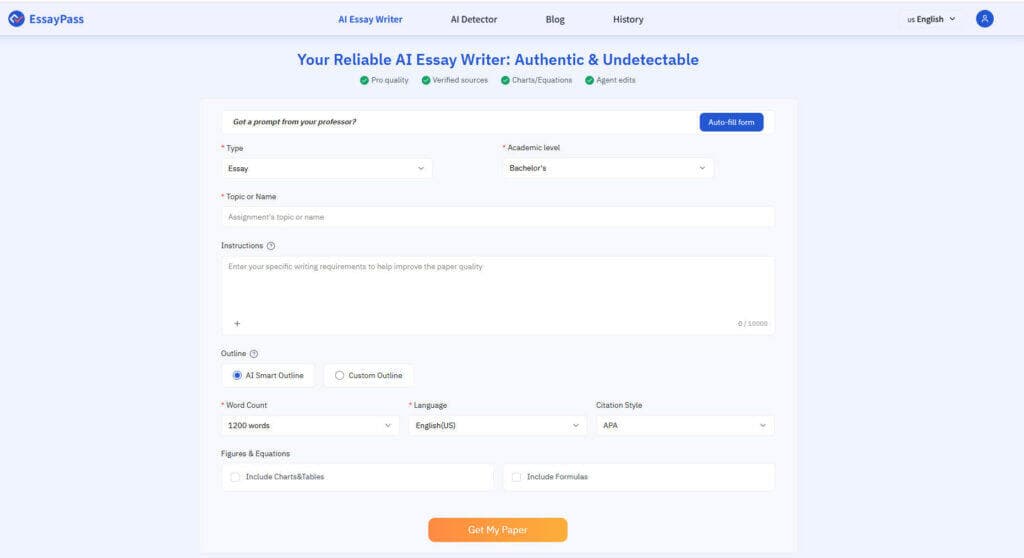
Tip: Using essay-focused tools that allow word count adjustments, like EssayPass AI essay writer, can help students align their essays with grading expectations efficiently.
Paraphrasing Risks and Originality Concerns
Over-paraphrasing can distort arguments; under-paraphrasing triggers plagiarism warnings. Students need tools that allow controlled semantic rewriting, preserving meaning while improving originality.
Structural Consistency Across Essays
Disconnected paragraphs from generic AI tools force students to manually restructure, creating inefficiency and stress. Maintaining logical flow from introduction to conclusion is non-negotiable for academic evaluation. Essay-focused AI ensures automatic paragraph alignment with thesis and argument development.
What Students Really Expect From a Claude AI Alternative
Students are looking for solutions to very specific academic challenges, not general AI content generation.
A Workflow Centered on Essay Success
Students need guidance on introductions, thesis clarity, body paragraphs, transitions, and conclusions. Generic AI may generate readable text, but fails in logical cohesion. Tools designed for academic workflows outperform by structuring content around grading criteria. You can also explore how to write an academic essay effectively to see real examples.
Adjustable Controls for Confidence
High-intent students expect control over word count, tone, and paraphrasing intensity. This flexibility increases confidence and essay quality.
Multi-Draft Support for Iterative Improvement
Academic writing is rarely one-and-done. Students need tools that support drafting, revising, and polishing iteratively. The absence of such support often leads to last-minute errors and poor grades.
Why Essay-Focused AI Outperforms General AI in Academic Writing
Generic AI is designed for general communication, not academic standards. Essay-focused AI adapts to grading rubrics, logical flow, and structure needs, saving students time and protecting grades.
Built for Academic Design, Not Casual Output
These tools prioritize thesis support, evidence integration, and formal tone from the start. For instance, EssayPass ensures each paragraph aligns with academic expectations, reducing corrections later.
Controlled Paraphrasing Ensures Originality
Essay-focused AI allows fine-grained control over paraphrasing, maintaining meaning while improving originality. If you want to see how EssayPass handles this, check out its AI essay writer page.
Word Count and Structural Optimization
Students can set precise word count goals and structure outlines, ensuring every paragraph contributes meaningfully to their essays. This transforms AI from a draft generator into an academic workflow assistant.
Why Students Transition to EssayPass as a Claude AI Alternative
Many students reach a point where generic AI tools simply cannot meet academic requirements. This transition often occurs when multiple pain points overlap:
-
Time pressure: Students realize that manually correcting AI drafts to meet word counts, maintain thesis coherence, or improve argument flow consumes more time than rewriting manually.
-
Risk of plagiarism: Generic AI output often requires heavy paraphrasing, increasing the chance of similarity detection alerts.
-
Confidence in grades: Uncertainty about whether the essay meets academic standards creates anxiety during submission.
Essay-focused AI like EssayPass addresses these issues directly:
-
Structured support – Aligns paragraphs, thesis statements, and transitions automatically.
-
Controlled paraphrasing – Maintains original meaning while reducing similarity scores.
-
Word count precision – Students can set limits and trust the AI to meet them.
Practical example: A student struggling with a 1000-word essay can generate a draft that already meets word count, logical structure, and paraphrasing standards within 30–40 minutes, rather than spending hours editing a generic AI draft.
Why this matters for conversion: Students reading this section see direct solutions to their real pain points, making EssayPass appear not as a generic option, but as a rational, necessary step to solve their problems.
Which Students Benefit Most From an Essay-Focused Claude AI Alternative
Not all students need the same level of AI support. Identifying who benefits most makes the value proposition concrete:
-
University students juggling multiple courses: They need consistent, reliable essay structure without spending extra time on revisions. Essay-focused AI reduces cognitive load and ensures each essay meets academic standards.
-
ESL and international students writing in academic English: Maintaining formal tone, clarity, and argument consistency is particularly challenging. EssayPass provides linguistic support while preserving their original ideas. Students seeking assurance about originality can use EssayPass AI detection to verify plagiarism safety.
-
Students facing tight deadlines: Time-sensitive assignments require output that is structurally correct, word-count compliant, and academically sound. Essay-focused AI allows students to produce high-quality essays efficiently without compromising grades.
Psychological impact for conversion: Students immediately identify with one of these profiles, creating self-driven motivation to try the tool. This self-recognition is a powerful conversion driver.
Final Perspective: Choosing a Claude AI Alternative Built for Academic Reality
Searching for a Claude AI alternative signals students are aware that fluent AI output alone is not enough. They need structure, control, and academic alignment.
An essay-focused alternative like EssayPass adapts AI to the academic workflow itself. For predictable results, reduced stress, and stronger submission confidence, students benefit from a tool designed specifically for academic success. You can also explore more tips on how to write a research paper efficiently to combine AI assistance with effective academic techniques.