
An essay conclusion is the final paragraph that summarizes your main points and restates your thesis in a fresh way. Staring at a blank page is the worst feeling for any student. You watch the clock tick toward a midnight deadline while your brain feels frozen. This pressure often leads to weak endings that ruin hours of hard research. Fortunately, you can use specific strategies to create a perfect finale that impresses your professor. This guide shows you how to end your paper with authority and clarity.
Purpose of Your Finale
Stop Using Tired Clichés
Readers find phrases like “In conclusion” or “To sum up” predictable and boring. These starters sound like elevator music—polite but forgettable. You should try punchier options to keep your audience awake. Use specific transition words like “ultimately” or “overall” to signal the end naturally. For example, instead of saying “The end is here,” try “Ultimately, public health depends on making better food choices today.”
Master the Last Impression
Your ending is your final chance to impact the audience. A strong finale must answer the “so what?” question. Don’t just list facts; show why your argument matters in the real world. If you are learning how to write a research paper, aim for a powerful moment that lingers. For example, if you write about green energy, predict how it will change city life by 2050.
Avoid Formulaic Structures
The “hamburger essay” style often restricts complex ideas. University-level writing requires synthesis, not just a simple recap. You should connect your data to a broader theme or future debate. For example, instead of saying “I have shown that dogs are smart,” say “High intelligence makes certain breeds essential for modern criminal rehabilitation.” This approach shows you understand the broader significance of your work.
Mastering Academic Integrity
Reject Last-Minute Evidence
Your conclusion seals the argument and should not open new debates. Never introduce fresh statistics or brand-new research findings in this section. Avoid mentioning a 2024 survey if you did not discuss it in the body paragraphs. You must focus on synthesizing what you have already proven to maintain your logic.
Paraphrase to Beat Plagiarism
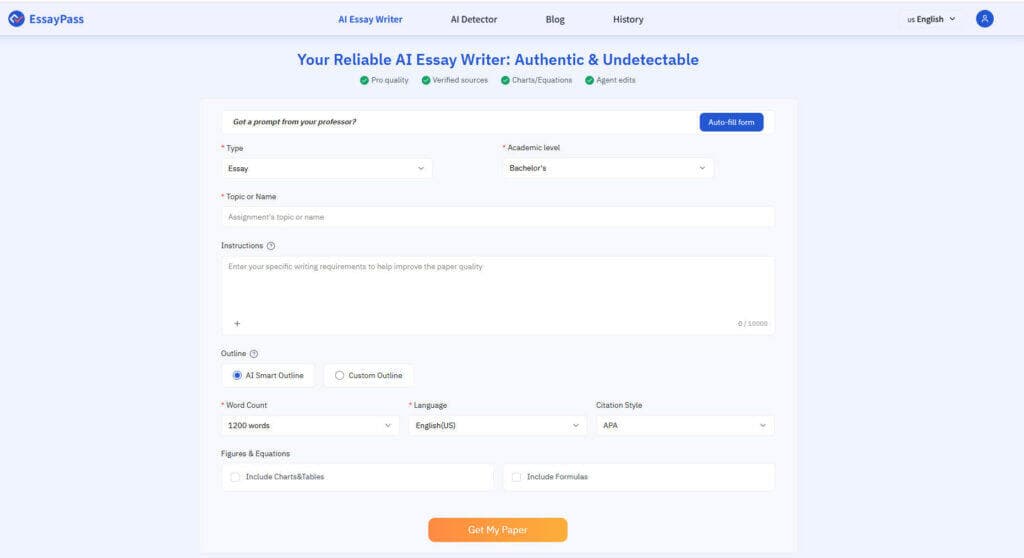
Never copy and paste your thesis statement from the introduction. You should restate your main idea using fresh, sophisticated language. This is vital for maintaining academic integrity. EssayPass helps you rephrase your stance while keeping your original meaning. Our Verifiable Turnitin Report ensures your final summary stays 100% unique.
Simplify Citation Formatting
Academic conclusions often require a final nod to your primary sources. You must follow strict rules for APA, MLA, or Chicago formatting to keep your authority. Check our guide on how to write an APA essay for specific layout tips. EssayPass generates verifiable citations in one click, so you never lose points on formatting.
Ditch the Apologetic Tone
Stop using phrases that make your argument look weak or uncertain. Avoid fillers like “I am not an expert” or “There is no clear answer.” If you want to master word count, remove these weak qualifiers first. Use “The evidence proves” instead of “There are good arguments on both sides.” This creates an effective closing sentence that leaves a lasting impression.
Polishing Impact with AI
Humanize Robotic AI Transitions
Standard AI often uses robotic links that sound forgettable. Humanized AI focuses on the logical flow between your final body paragraph and your finale. You should select specific transition words to build momentum. EssayPass mimics human rhythm to create a smooth, persuasive flow that professors prefer. It avoids the dry, mechanical tone found in most generic tools.
Verify Nuance with Bilingual Tools
Non-native writers often struggle to find the correct emotional weight for a finale. The EssayPass Bilingual Viewer lets you verify the subtle meaning and nuance of every final sentence. Verify if “profound implications” captures your native intent better than a simple “big result.” This precision ensures you submit a professional finale that meets high academic standards. Always weigh the pros and cons of using AI for essays to maintain your unique voice.
Elevating Your Academic Voice
Your final paragraph serves as the ultimate anchor for your entire argument. It transforms a simple summary into a persuasive victory that sticks with your reader. By avoiding robotic clichés and focusing on synthesis, you ensure your voice remains authoritative until the very last period.
-
Focus on Synthesis: Combine your main points to show a unified picture instead of a repetitive list.
-
Maintain Integrity: Use verifiable tools to check your citations and prevent accidental plagiarism.
-
Leave an Impact: Answer the “So what?” question by highlighting the real-world value of your research.
Ultimately, an effective closing sentence does more than close a document; it opens a new perspective for your audience. Don’t let a weak ending ruin hours of hard work. Submit your paper with total confidence.