Writing an essay is hard enough. But figuring out the correct essay format can feel like learning a whole new language. Have you ever finished writing a great paper, only to lose points because your margins were wrong or your citations were messy? You are not alone.
This guide will break down the basics of essay formatting, explain the most common styles, and introduce you to a smart tool that can handle the hard work for you.
Why Does Essay Format Matter?
Think of your essay format as the “outfit” your paper wears. If you go to a job interview in messy clothes, you might not get the job, even if you are qualified. Similarly, if your essay looks messy, your professor might think you didn’t put in enough effort.
A proper essay format does three things:
-
Improves Readability: It makes your arguments easy to follow.
-
Shows Professionalism: It proves you pay attention to detail.
-
Prevents Plagiarism: Proper citation formatting gives credit where it is due.
Key Components of a Standard College Essay Format
While different professors might have specific preferences, most academic writing follows a standard essay format. Whether you are learning how to write a college essay for the first time or the tenth, here are the non-negotiable basics you need to know.
Font and Spacing
The golden rule for almost every academic paper is readability.
-
Font: Always use a standard, easy-to-read font. Times New Roman (12 pt) is the safest choice. Arial or Calibri are sometimes accepted, but always check your syllabus.
-
Spacing: Your essay should be double-spaced. This applies to the main body, the references, and even the title block. Double spacing gives your professor room to write comments.
Margins and Page Numbers
-
Margins: Set your margins to 1 inch (2.54 cm) on all sides (top, bottom, left, and right). This is the default setting in Microsoft Word and Google Docs.
-
Page Numbers: These usually go in the top right corner. In some formats, you also need to include your last name next to the page number (e.g., “Smith 1”).
MLA vs. APA: Choosing the Right Essay Format Style
One of the most confusing parts of college essay format is knowing which citation style to use. The two most common styles are MLA and APA, though history students often encounter the Chicago essay format.
Using the wrong style can lower your grade, so here is a detailed breakdown to help you choose the right one.
MLA Format (Modern Language Association)
Who uses it? MLA is the standard for the Humanities. This includes subjects like English Literature, Philosophy, Arts, and Cultural Studies.
Why does it look this way? In humanities, the author is the most important element. The date of the work is less important (Shakespeare is still relevant today, regardless of when the edition was printed).
Key Formatting Rules:
-
In-Text Citations: MLA uses an “Author-Page” method. You do not need a comma between the name and the page number.
-
Example: (Orwell 245).
-
-
Source List: The list of sources at the end of your essay is titled “Works Cited.”
-
Title Page: MLA usually does not require a separate title page. Instead, your name, professor’s name, course, and date appear in the top-left corner of the first page.
APA Format (American Psychological Association)
Who uses it? APA is the gold standard for Social Sciences. This includes Psychology, Sociology, Business, Nursing, and Education. If you need a deep dive, check out our guide on how to write an APA essay.
Why does it look this way? In sciences, the date of the research is crucial. A medical study from 1920 is very different from one in 2024. Therefore, APA emphasizes the year.
Key Formatting Rules:
-
In-Text Citations: Uses the Author–Date method and requires a comma.
-
Example: (Smith 23)
-
For direct quotes: (Smith 23, p. 23)
-
-
Source List: The list of sources at the end is titled “References.”
-
Title Page: APA almost always requires a separate Title Page. It should include the title of the paper, the author’s name, and institutional affiliation centered on the page.
Quick Comparison: MLA vs. APA
If you are unsure which essay format to use, always check your syllabus or ask your professor. The comparison below can help you quickly identify the correct style.
-
Header:
-
MLA: Last name and page number (Smith 1).
-
APA: Student papers typically require only a page number, while professional papers also include a running head.
-
-
Block Quotes:
-
MLA: Quotes longer than 4 lines are indented.
-
APA: Quotes longer than 40 words are indented.
-
-
Author Names in Reference List:
-
MLA: Full first name (Smith, John).
-
APA: First initial only (Smith, J.).
-
Below is a simplified comparison to help you quickly distinguish between MLA and APA formats.
| Feature | MLA Style | APA Style |
| Best For | Humanities (Lit, Arts, Philosophy) | Social Sciences (Psych, Business, Nursing) |
| In-Text Citation | Author-Page (Smith 23) | Author-Date (Smith, 2023) |
| Source List Title | Works Cited | References |
| Header | Last Name + Page # (Smith 1) | Page # (Running Head for pros) |
| Author Names | Full First Name (Smith, John) | First Initial Only (Smith, J.) |
| Block Quotes | Indent if 4+ lines | Indent if 40+ words |
A Real-World Example of Essay Structure
Visualizing the structure helps you understand the flow. A standard formatted essay always includes:
-
Introduction: Starts with a “Hook” and ends with a clear Thesis Statement.
-
Body Paragraphs: Each paragraph starts with a Topic Sentence. For example, if you are writing about “Climate Change,” one paragraph might focus solely on “Ocean Temperatures.”
-
Conclusion: Summarizes your main points and restates the thesis in a new way. Do not introduce new evidence here.
This structure applies to almost all types of papers, whether you are drafting a descriptive essay or working on complex case study assignments.
Stop Worrying About Essay Formatting: Let EssayPass Handle It
Formatting an essay correctly takes time—time you could spend improving your ideas and arguments. Many students now rely on smart academic tools to reduce formatting errors and streamline the writing process.
EssayPass is an AI essay writer designed specifically to handle the heavy lifting of college essays. Whether you are working on a dense research paper or a simple argumentative essay, EssayPass helps ensure your work is professional, structured, and submission-ready.
Why Students Choose EssayPass?
-
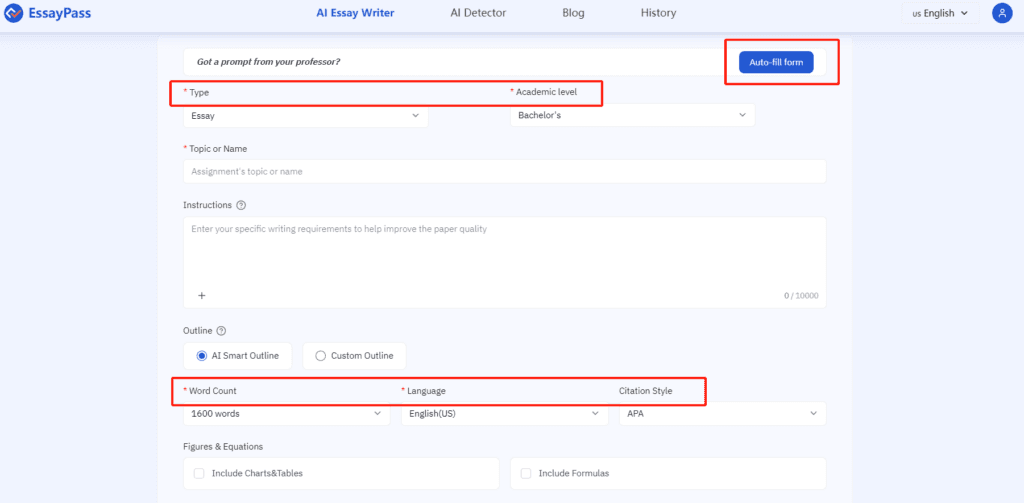
One-Click Full Text Generation: Stuck on a blank page? EssayPass can generate a complete, structured essay for you in minutes.
-
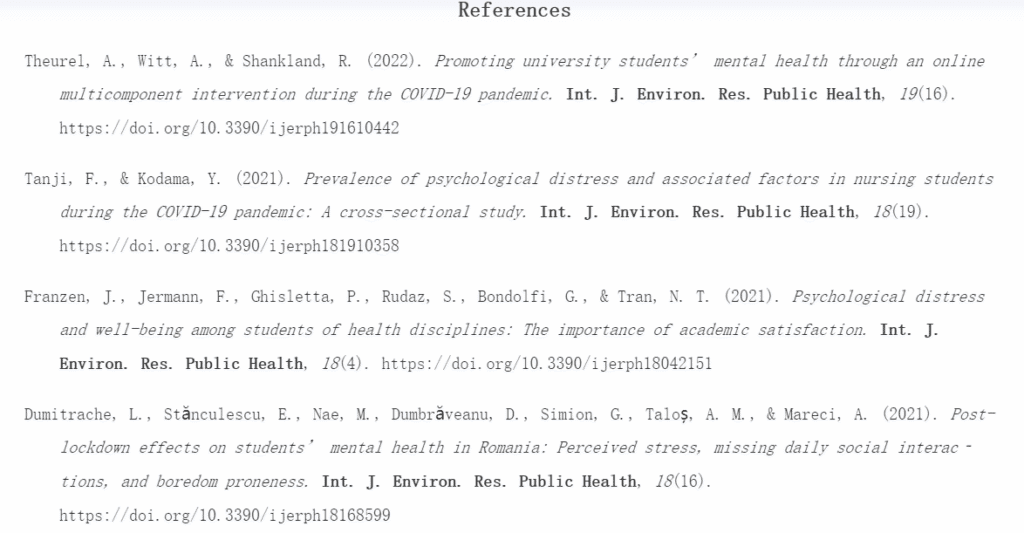
Multi-Format Support: EssayPass supports 8 citation styles. Whether your assignment requires APA, MLA, Chicago, or Harvard style, each format is covered.
-
Diverse Essay Types: From narrative essays to analytical research papers, our tool understands the unique structural requirements of different academic assignments.
-
Real Citations & Downloads: Unlike basic AI tools, EssayPass provides real, verifiable references that you can download directly. This enhances academic credibility and significantly reduces your research time.
-
Safety & Originality: We prioritize your academic integrity. Our system includes optional Turnitin-based plagiarism checks and a reliable AI detector. This is available as an optional value-added service before you submit your order, ensuring your submission is safe and original.
Get More Than Just an Essay
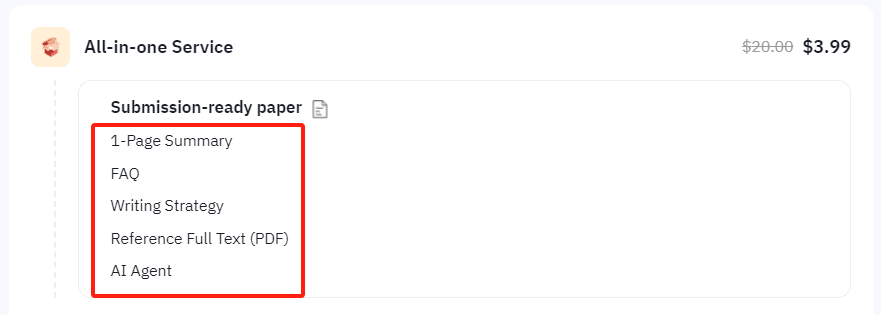
When you use EssayPass, you receive a complete academic package. EssayPass provides 5 additional deliverables alongside your main paper to help you understand the topic better and present it confidently:
-
A concise summary of the entire paper.
-
Topic-focused FAQs to help you prepare for defense.
-
A step-by-step writing strategy explaining the logic used.
-
Downloadable reference PDFs for all cited sources.
-
An AI agent for instant follow-up edits and refinements.
Don’t let formatting stress slow you down. Experience the future of academic writing today.
Click to Try EssayPass and Perfect Your Essay Now.