
Writing a college paper shouldn’t feel harder than the research itself—but for many students, it does. You’ve finished reading the sources, shaped your argument, and hit the required word count. Then comes the instruction that instantly raises your stress level:
“Use Chicago format.”
Suddenly, you’re no longer worried about your thesis—you’re worried about footnotes vs. bibliography, comma placement, page numbers, and whether one small formatting mistake might cost you valuable points. You may find yourself asking: Is this Turabian or full Chicago? Do I need a title page? Why does my footnote look different from the bibliography entry?
If any of this sounds familiar, you’re not alone. Chicago style is one of the most detailed—and most intimidating—academic formats students are expected to use.
What Is the Chicago Essay Format?
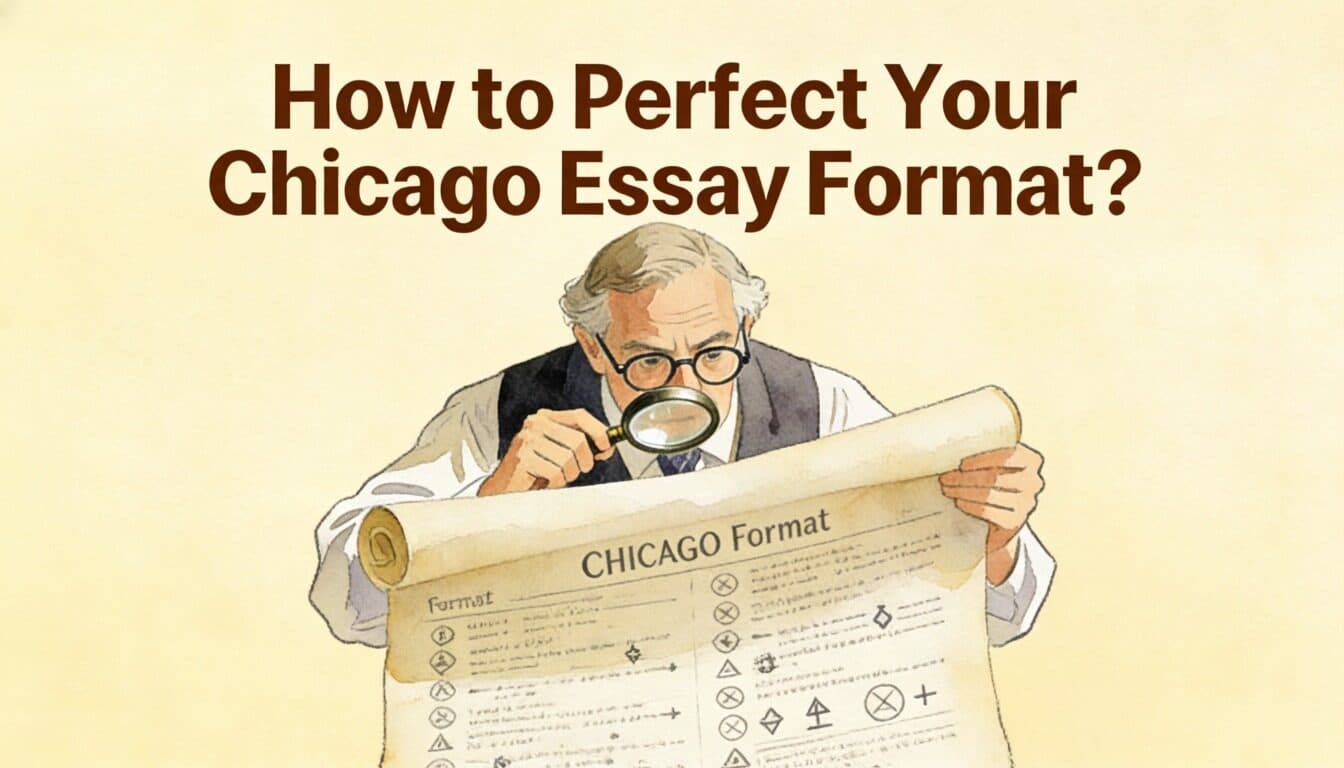
The Chicago Essay Format refers to the set of academic writing and citation rules established by the Chicago Manual of Style (CMOS). It is most commonly used in history, literature, philosophy, and other humanities courses, and it emphasizes precision, clarity, and source transparency.
In college settings, “Chicago format” usually means the Notes and Bibliography system, where sources are cited using footnotes or endnotes in the text and a bibliography at the end of the paper. Many professors also accept—or specifically require—Turabian style, which is the student-friendly version of Chicago with nearly identical rules.
While the purpose of Chicago style is simple—clearly crediting sources—the formatting details can quickly become overwhelming without clear guidance. That’s exactly why this guide exists.
Chicago vs. Turabian: What Students Actually Need to Know
Before formatting anything, clear this up:
| Feature | Chicago (CMOS) | Turabian |
| Who it’s for | Publishers & scholars | Students |
| Citation system | Notes & Bibliography / Author-Date | Same as Chicago |
| Formatting rules | Very detailed | Slightly simplified |
| What professors usually want | ❌ Rarely | ✅ Most common |
👉 Good news: If your paper follows Turabian correctly, it will almost always be accepted as Chicago style in college classes.
Chicago Essay Format: Basic Setup (No Guesswork)
Before writing a single paragraph, make sure to review general essay format rules and examples, and then set up your document specifically for Chicago style:
-
Margins: 1 inch (2.54 cm) on all sides
-
Font: Times New Roman, 12 pt
-
Line Spacing: Double-spaced main text
-
Single-spaced:
-
Footnotes
-
Bibliography entries
-
Block quotes (with a blank line before & after)
-
-
Page Numbers: Top-right header (usually starting from page 1 of the text)
💡 Pro tip: Always check your syllabus—some professors want page numbers starting after the title page.
Footnotes vs. Bibliography (The #1 Source of Lost Points)
Chicago uses two versions of the same source:
Quick Comparison Table
| Feature | Footnote (N) | Bibliography (B) |
| Location | Bottom of page | End of paper |
| Author name | First Last | Last, First |
| Punctuation | Commas | Periods |
| Publication info | In parentheses | No parentheses |
| Page numbers | Specific page | Page range |
| Indentation | First line indented | Hanging indent |
Real Chicago Citation Examples
Here are specific examples of how to cite common sources in your Chicago style paper.
Scenario 1: A Standard Book
This format is essential if you are learning how to write a book review for your history course.
The Rule: Note the difference in the author’s name and punctuation.
-
Footnote:Malcolm Gladwell, The Tipping Point: How Little Things Can Make a Big Difference (Boston: Little, Brown, 2000), 64–65.
-
Bibliography:
Scenario 2: An Academic Journal Article
An Academic Journal Article Correctly citing journals is a key skill when you need to write an article review or support your thesis.
The Rule: Article titles go in “Quotation Marks,” journal names go in Italics.
-
Footnote:Emily L. Dittmar and Douglas W. Schemske, “Temporal Variation in Selection Influences Microgeographic Local Adaptation,” American Naturalist 202, no. 4 (2023): 472.
-
Bibliography:
Scenario 3: A Website (No Author)
The Rule: If no author is listed, start with the owner of the site or the title. Include the access date if there is no publication date.
-
Footnote:“Privacy Policy,” Google, last modified August 19, 2024, https://policies.google.com/privacy.
-
Bibliography:
Scenario 4: A YouTube Video
The Rule: Treat the video title like an article title.
-
Footnote:“Chicago Style Bibliography,” Scribbr, February 20, 2020, video, 3:15, https://youtu.be/somevideoID.
-
Bibliography:
Shortened Notes (When You Cite the Same Source Again)
You only write the full footnote once.
First citation
Jared Diamond, Guns, Germs, and Steel (New York: Norton, 1999), 45.
Later citation
Diamond, Guns, Germs, and Steel, 88.
❗ Do NOT use shortened notes if another source by the same author appears between citations.
Common Chicago Formatting Mistakes Professors Catch Instantly
❌ Using bibliography-style citations in footnotes
❌ Forgetting hanging indents in bibliography
❌ Using author–date when Notes & Bibliography is required
❌ Missing page numbers in footnotes
❌ Inconsistent punctuation (commas vs periods)
Simplify Your Writing, Master Your Essays with EssayPass
While understanding the Chicago essay format is one thing, managing dozens of sources, formatting every footnote, and ensuring your bibliography is perfect can be a major headache. This is where you need more than just a guide—you need a true writing partner.
Meet EssayPass AI Essay Writer, your expert assistant for academic writing. We built EssayPass to take the stress out of the writing process, so you can focus on your ideas, not on tedious formatting rules.
EssayPass is packed with features designed for student success:
-
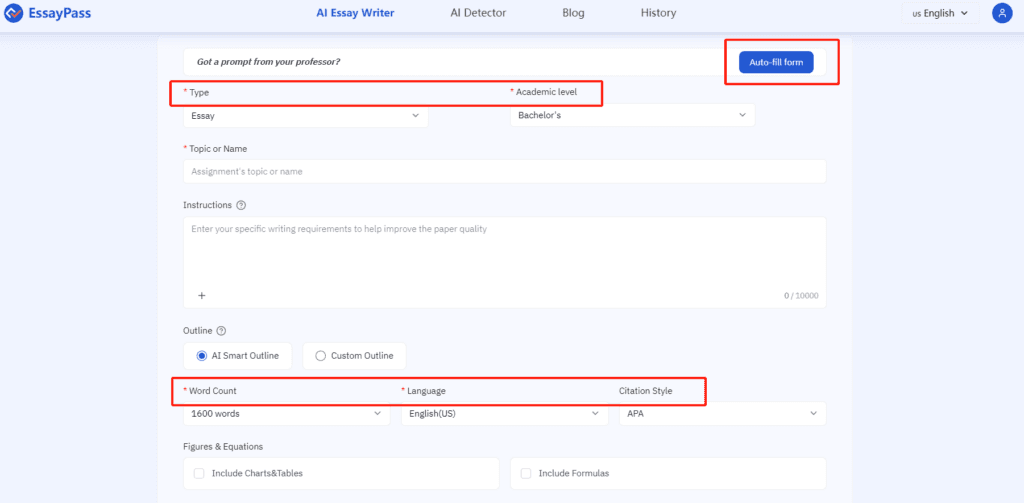
Intelligent Academic Writing Assistant: Generate a complete draft based on the assignment requirements you provide.
-
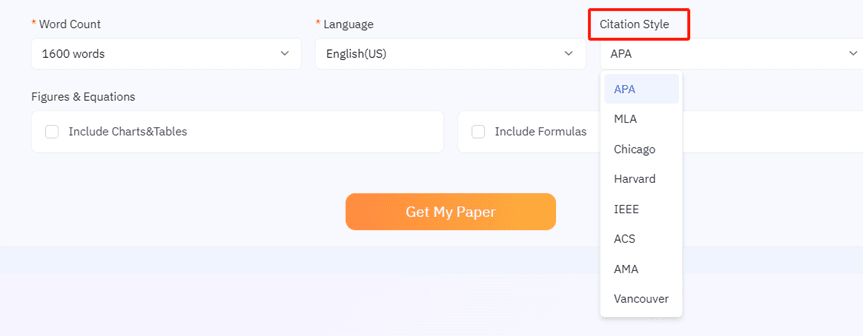
Eight Citation Formats: Whether you need Chicago style or need to know how to write an APA essay, we support all major formats including MLA, Harvard, and IEEE.
-
Structure and Outline Tools: Organize your thoughts and build a strong, logical argument—crucial when you aim to write an argumentative essay from the ground up.
- Optional Turnitin Report: Worried about originality? Use our built-in AI Detector and request optional Turnitin-based reports to ensure your paper is plagiarism-free and AI-safe.
-
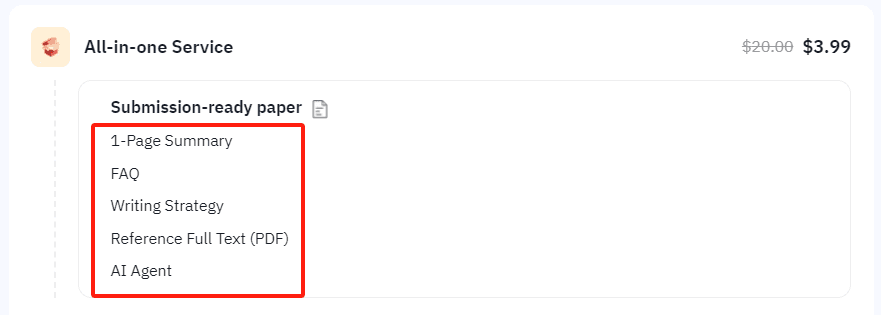
Learning Tools Included: You don’t just get an essay; you get a learning package. Access a Summary, FAQs, Writing Strategy Breakdown, Reference PDFs, and an AI Editing Assistant to help you understand the topic better.
Stop letting formatting rules slow you down. It’s time to write smarter, not harder. Step into a world of effortless writing and see how thousands of students are acing their papers.
👉 Click here to explore EssayPass and perfect your essay today!