
Quick Start: 60-Second Essay Format Checklist
- Margins: 1 inch (2.54 cm) on all sides
- Font: a readable standard font (commonly 12-point)
- Line spacing: double spacing
- Paragraphs: first line indent (commonly 0.5 in / 1.27 cm) unless your rubric says otherwise
- Alignment: left-aligned (avoid full justification unless required)
- Page numbers: usually in the header, top right
- Title formatting: depends on style (APA title page vs. MLA first-page heading)
- Use one citation style consistently (don’t mix APA + MLA rules)
- Every in-text citation must appear in the References / Works Cited / Bibliography list
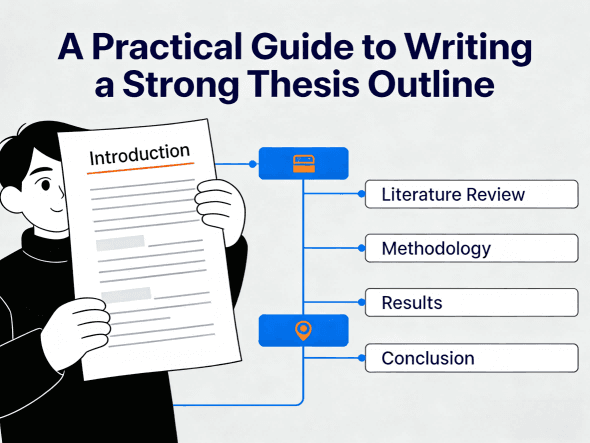
Pro Tip: Formatting is only the final step. If you are still in the early stages of drafting, mastering the structural requirements of a research paper or a complex analytical essay will make the final formatting much smoother.
Choose the Right Style (APA vs. MLA vs. Chicago)
Quick comparison table
| Feature | APA | MLA | Chicago |
| Common fields | Social sciences | Humanities | History/humanities (often), some mixed disciplines |
| In-text citation | Author–Date | Author–Page | Either footnotes (NB) or Author–Date |
| Source list title | References | Works Cited | Bibliography (NB) or References (Author–Date) |
| Title page | Usually yes (student paper title page is common) | Usually no (first-page heading instead) | Varies by instructor/program |
Chicago has TWO systems
APA Format: Setup + Examples
APA is strict about consistency and dates. For a deeper dive into these specific rules, you can check out our dedicated guide on how to write an APA essay.
APA Setup
-
Page header: page number only (a “running head” is typically for professional papers unless your instructor requests it)
-
Title page: common in APA student papers (title + name + institution; course/instructor/date depend on your rubric)
-
Headings: used to organize sections, especially in longer papers
APA In-Text Citations
Use these patterns for most student papers:
-
Paraphrase (1 author): (Chen, 2024)
-
Two authors: (Chen & Rivera, 2025)
-
3+ authors: (Chen et al., 2024)
-
Direct quote: (Chen, 2024, p. 18)
APA almost always requires the year in citations. That’s the most common mistake students make when switching from MLA.
APA References Page
-
Title the page: References
-
Use hanging indents
-
Entries are alphabetized by the author’s last name
-
Every in-text citation must match a reference entry (and vice versa)
APA Reference Examples (2024–2025)
Journal article (example format):
Webpage (example format):
Replace names/titles/DOI/URLs with your real sources. The structure above is the key.
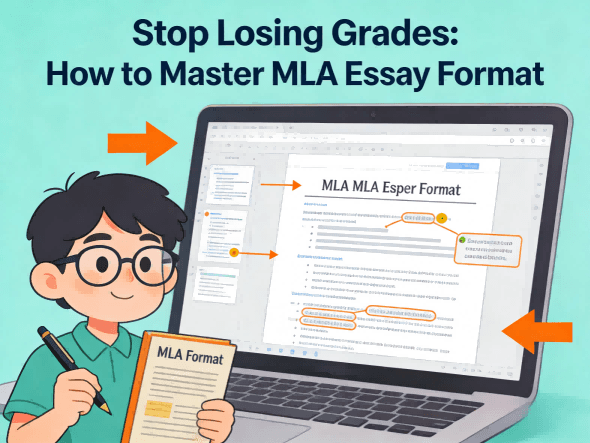
MLA Format: Setup + Examples + Template
MLA is common in humanities writing and is usually simpler than APA—but the header and Works Cited page are where people lose points.
MLA Header
MLA typically uses:
-
LastName PageNumber in the top-right header (e.g., Ng 1)
-
Pages numbered consecutively
MLA First Page (Common Setup)
MLA often does not require a separate title page. Instead, page 1 includes a first-page heading (your name, instructor, course, date), then a centered title, then your text.
MLA In-Text Citations
-
Basic format: (AuthorLastName PageNumber)
-
Example: (Patel 114)
Works Cited Essentials (What Graders Check)
-
Title the page: Works Cited (centered)
-
Use hanging indents
-
Keep it double-spaced
-
Do not add extra blank lines between entries
MLA Works Cited Examples (2024–2025)
Book (example format):
Website article (example format):
Chicago Style: Notes & Bibliography vs. Author–Date
Chicago is powerful—but confusing—because it can look like two completely different formats.
Option A: Notes & Bibliography (NB)
Most common in history and many humanities courses.
-
In-text method: footnotes or endnotes
-
End-of-paper list: usually a Bibliography
Chicago NB Footnote Examples (Safe, Correct Structure)
First citation (book):
Later citation (same source):
Chicago NB Bibliography Example (book)
Option B: Author–Date
More common in some sciences/social-science contexts.
-
In-text method: (Author Year, Page)
-
End-of-paper list: References
Chicago Author–Date In-Text Examples (2024–2025)
(Lastname 2024, 23) (Lastname and Lastname 2025, 114)
Chicago Author–Date Reference Example (journal article)
Rule of thumb: If your instructions say “Chicago” and mention footnotes → choose Notes & Bibliography.
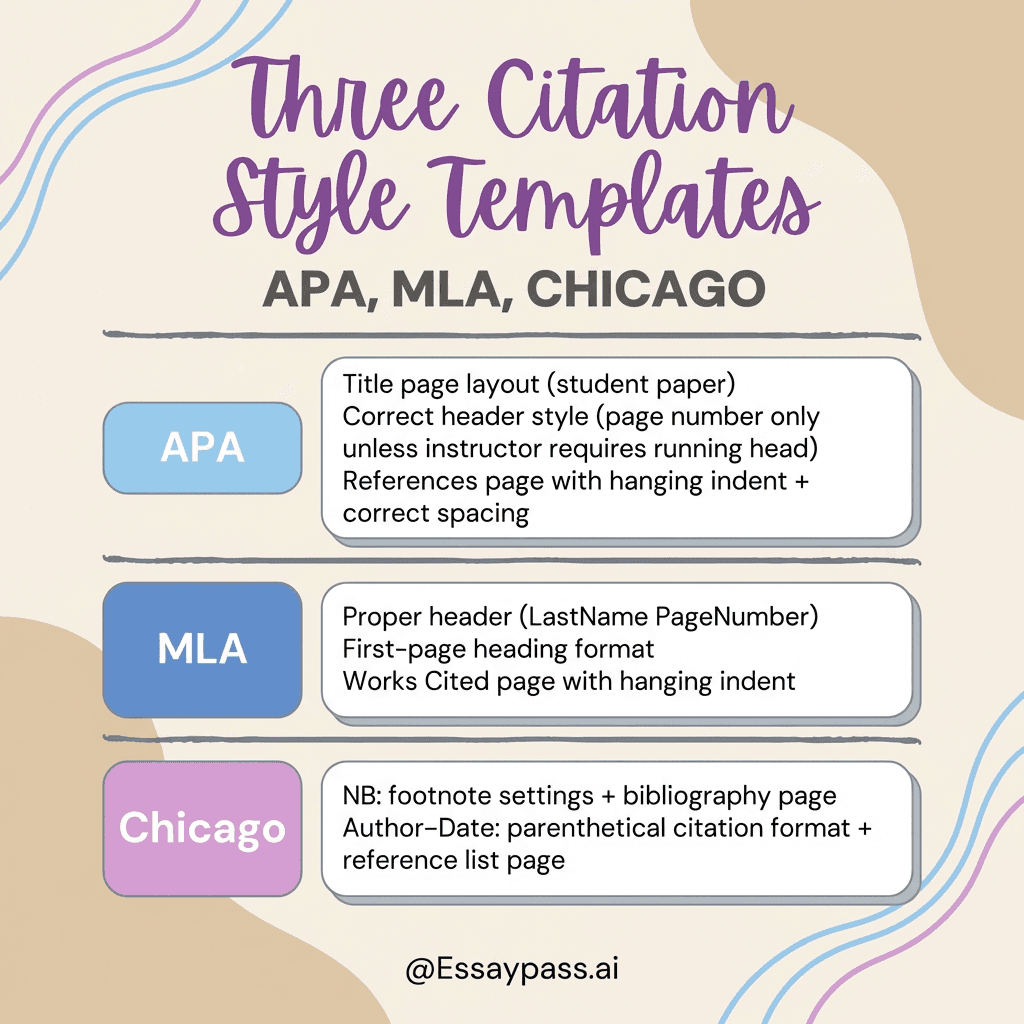
Three Citation Style Templates
Templates save time and prevent errors because they lock in correct spacing, headings, and page layout.
What a Good Template Includes
APA template should include
-
Title page layout (student paper)
-
Correct header style (page number only unless instructor requires running head)
-
References page with hanging indent + correct spacing
MLA template should include
-
Proper header (LastName PageNumber)
-
First-page heading format
-
Works Cited page with hanging indent
Chicago template should include
-
NB: footnote settings + bibliography page
-
Author–Date: parenthetical citation format + reference list page
How to Use Templates Without Breaking Formatting
-
Open the template
-
Paste your content using Paste without formatting (to avoid importing messy styles)
-
Re-apply headings using built-in Styles (Heading 1, Heading 2)
-
Run the submission checklist below
Word & Google Docs Fixes (Fast)
These are the issues that make students rage-quit formatting.
Fix #1: Hanging Indent (References / Works Cited)
Goal: every line after the first line indents slightly.
Google Docs
-
Highlight your reference list
-
Format → Align & indent → Indentation options
-
Under “Special indent,” choose Hanging (commonly 0.5 in)
Microsoft Word
-
Highlight your references
-
Open Paragraph settings
-
Indentation → Special: Hanging (commonly 0.5 in)
Fix #2: “It’s double spaced… but still looks wrong”
Often caused by extra paragraph spacing.
-
Set Spacing Before = 0 and After = 0
-
Keep line spacing at Double
Fix #3: MLA Header Won’t Stay on Every Page
Don’t type it into the body. Use Insert → Header, then add your last name and page number so it updates automatically.
Submission-Ready Format Check
Use this checklist to catch the mistakes that cost the easiest points.
Style
-
I used the correct style (APA/MLA/Chicago)
-
If Chicago: I confirmed NB vs Author–Date
Layout
-
Margins, spacing, and font are consistent
-
Page numbers/header match the style rules
-
Title/first page setup matches the style
Citations
-
Every in-text citation appears in the source list
-
No “orphan” sources in the list that aren’t cited in the paper
-
References/Works Cited/Bibliography uses hanging indent
Consistency
-
Names/years/pages match between citations and source list entries
-
I didn’t switch formats halfway through (common after pasting notes)
Fast Option: Generate Draft + Run a Format Check
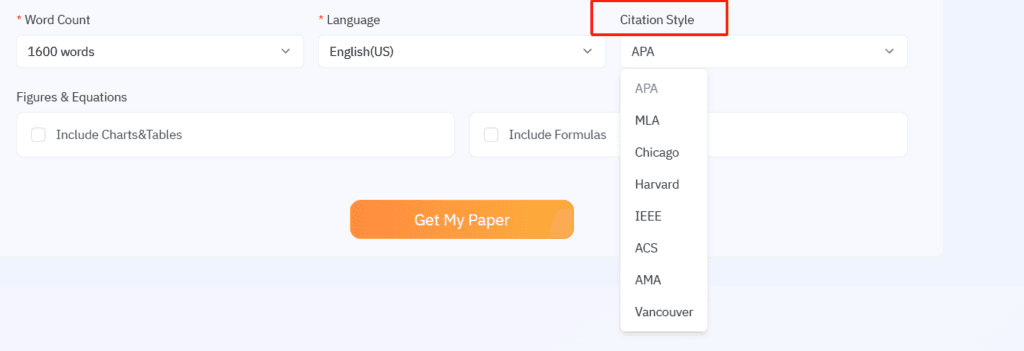
- Choose your style (APA/MLA/Chicago)
- Start from a draft
- Run a format + citation consistency check before submission