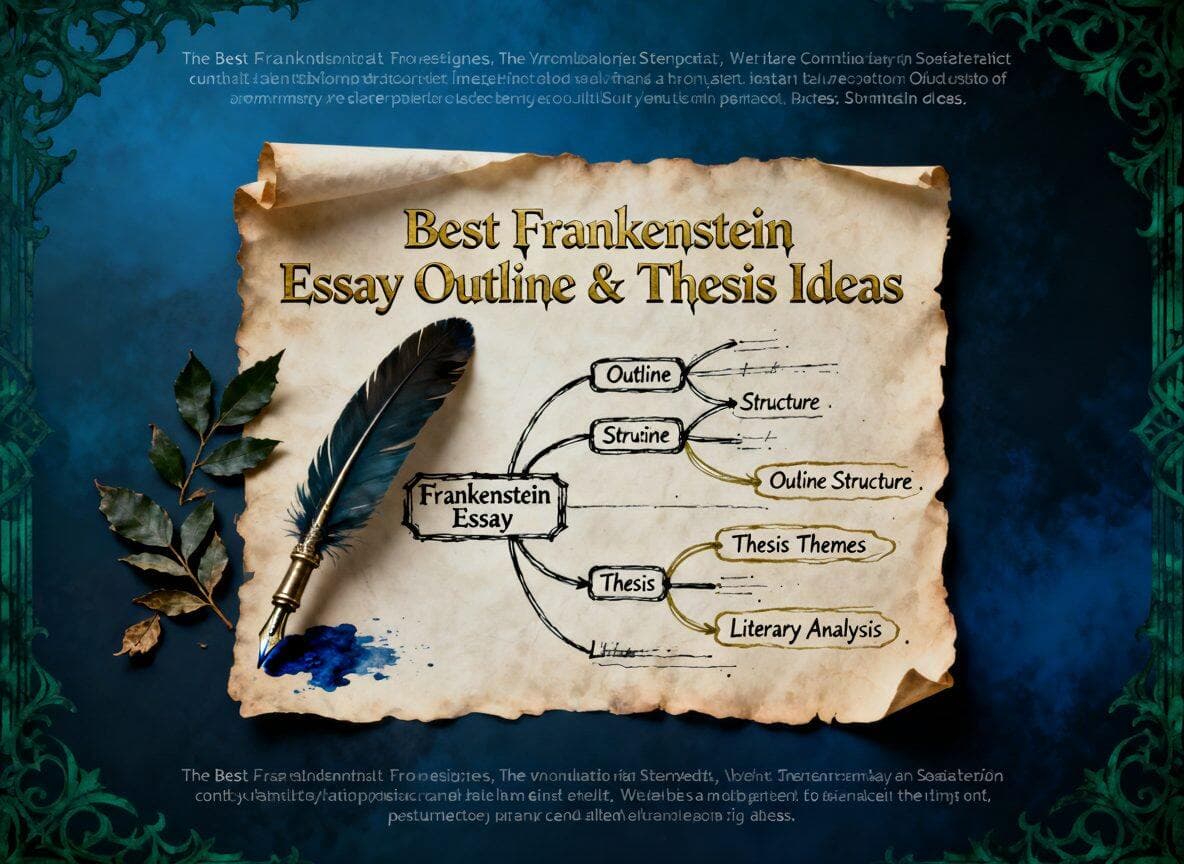

Frankenstein Essay Topics are specific thematic inquiries that challenge students to dissect the moral, scientific, and social complexities of Mary Shelley’s novel through a critical lens.
Stop wasting your time on manual formatting. This guide provides the “vital spark” your paper needs to come alive right now. We have gathered the most compelling prompts to help you navigate themes of ambition and isolation without the stress of a “monster” draft. By using a high-quality best AI essay writer, you can focus on deep thinking instead of fighting with the word count or editing and proofreading errors.
Writing an essay without a plan is like Victor trying to build a person out of random parts; you will likely end up with a “monster” of a draft that scares your professor away.
What is a Frankenstein Essay Outline?
A Frankenstein essay outline is a strategic roadmap that organizes your arguments around Mary Shelley’s complex themes, such as scientific hubris and isolation. It ensures your paper maintains a logical flow from the introductory hook to the final thesis defense. A solid outline prevents your draft from becoming a “monster” of disconnected thoughts that confuse your reader.
Why an Outline is a Big Deal for Your Grade
Writing is tough. We get it. If you try to stitch a paper together without a plan, you will end up with a mess that scares your professor away. An outline is your life raft. It stops you from rambling about plot summaries when you should be writing a deep analytical essay. Plus, it saves you hours of editing and proofreading later.
Most students fail because they “freewheel” their drafts. They start typing and hope for the best. Don’t do that. A clear structure helps you sequence arguments and signpost your claims. It turns a mountain of notes into a research paper that actually makes sense. Using an academic writing assistant can help you build this frame in seconds so you can focus on the “vital spark” of your ideas.
The Ultimate Step-by-Step Frankenstein Essay Outline
Here is a feasible structure for your next assignment. It uses the novel’s unique epistolary form to build a strong argument.
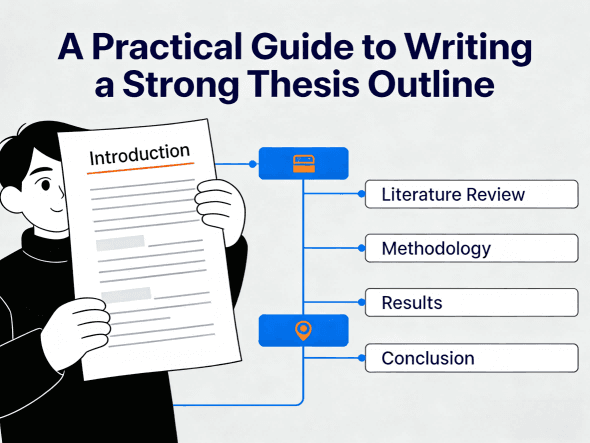
I. Introduction
-
- The Hook: Mention the 1816 ghost story contest or the “Modern Prometheus” myth.
- Context: Briefly explain Mary Shelley’s background and the 19th-century anxiety about science.
- Thesis Statement: State your main argument (e.g., Victor is the real monster because he lacks moral responsibility).
II. Body Paragraph 1: Scientific Ambition and Hubris
-
- Topic Sentence: Victor oversteps natural boundaries by “playing God”.
- Evidence: Discuss the “vital spark” of electricity and the rejection of the feminine in creation.
- Analysis: Link his obsession with the Prometheus myth and the consequences of “bad science”.
III. Body Paragraph 2: The Creature’s Isolation and Humanity
-
- Topic Sentence: Societal rejection and loneliness drive the creature to vengeance.
- Evidence: Use the monster’s refuge with the De Laceys and his acquisition of language.
- Analysis: Argue whether nature or nurture made him a “fiend”.
IV. Body Paragraph 3: The Failure of Responsibility
-
- Topic Sentence: Victor’s abandonment of his creation mirrors a failure of parenting and ethics.
- Evidence: Victor’s reaction to the creature’s birth and his refusal to create a mate.
- Analysis: Contrast Victor’s selfishness with Prometheus’s loyalty to mankind.
V. Conclusion
-
- Restate Thesis: Summarize how unchecked ambition leads to destruction.
- Final Thought: The bottom line is that Victor’s story serves as a warning for modern technology and AI.
Building a paper is like Victor’s experiment; if the skeleton is crooked, the final creature will never stand on its own. Try the best AI essay writer to generate a customized Frankenstein essay outline that fits your specific prompt.
Core Themes for Your Body Paragraphs
Great body paragraphs for a frankenstein essay outline must go beyond plot summaries to analyze deeper symbols. You should focus on how scientific ambition clashes with nature, the tragedy of forced isolation, or the erasure of the feminine. Picking a specific lane makes your argument sharper and more convincing to any professor.
Scientific Hubris and The Modern Prometheus
Victor isn’t just a scientist in a lab. He is a man playing God. He steals the “vital spark” of life just like Prometheus stole fire from the heavens. Pure hubris. By using electricity to animate a stitched-together corpse, he violates the very laws of nature that keep human society sane and balanced.
Shelley uses this to warn us. Science without morals is a “serpent to sting you”. If you are writing a research paper, you should mention how Victor’s obsession makes him “insensible to the charms of nature”. He forgets his family. He forgets his health. Plus, he creates a disaster he cannot control. It is a classic case of an “interventionist” mindset destroying the natural order.
Isolation and the Need for Companionship
Loneliness is the real killer in this book. It drives every major move. Victor isolates himself to build his monster, and then he deserts his creation. The creature hides in the woods, watching the De Lacey family and yearning for a “unity” he can never have.
Society treats the monster like a nightmare because of his face. This is the “Uncanny” effect—he looks almost human, but just wrong enough to be terrifying. When Victor destroys the female creature, he kills the monster’s last hope for a mate. So, the monster seeks revenge. The bottom line? Both characters become “slaves to their own fractured subjectivity” because they have no one to love.
Gender and the Passive Female Role
Women in this novel have it rough. Characters like Elizabeth and Justine are often “passive victims” who exist just to be killed off. Shelley uses their deaths to show how 19th-century gender roles were a big deal—and quite toxic.
Victor tries to create life without a woman. He wants a “masculine creation” that skips the maternal process entirely. But this erasure of the feminine leads to horror. Even the monster notices. He sees how Victor holds all the power in their “Social Contract” while women are left outside the loop. If you need to hit a specific essay word count, analyzing the trial of Justine is a perfect way to show how a “meek and submissive” role leads to tragedy.
Analogy: Writing a body paragraph without a central theme is like Victor’s first attempt at creation—it’s just a pile of dead parts that won’t move. But when you inject a “vital spark” like the Prometheus myth or feminist theory, the whole paper suddenly stands up and walks.