
Writing a Great Gatsby essay and blanking on what to argue? In the next 5 minutes, you’ll get college-level themes, symbols, and evidence you can plug straight into a thesis and outline.
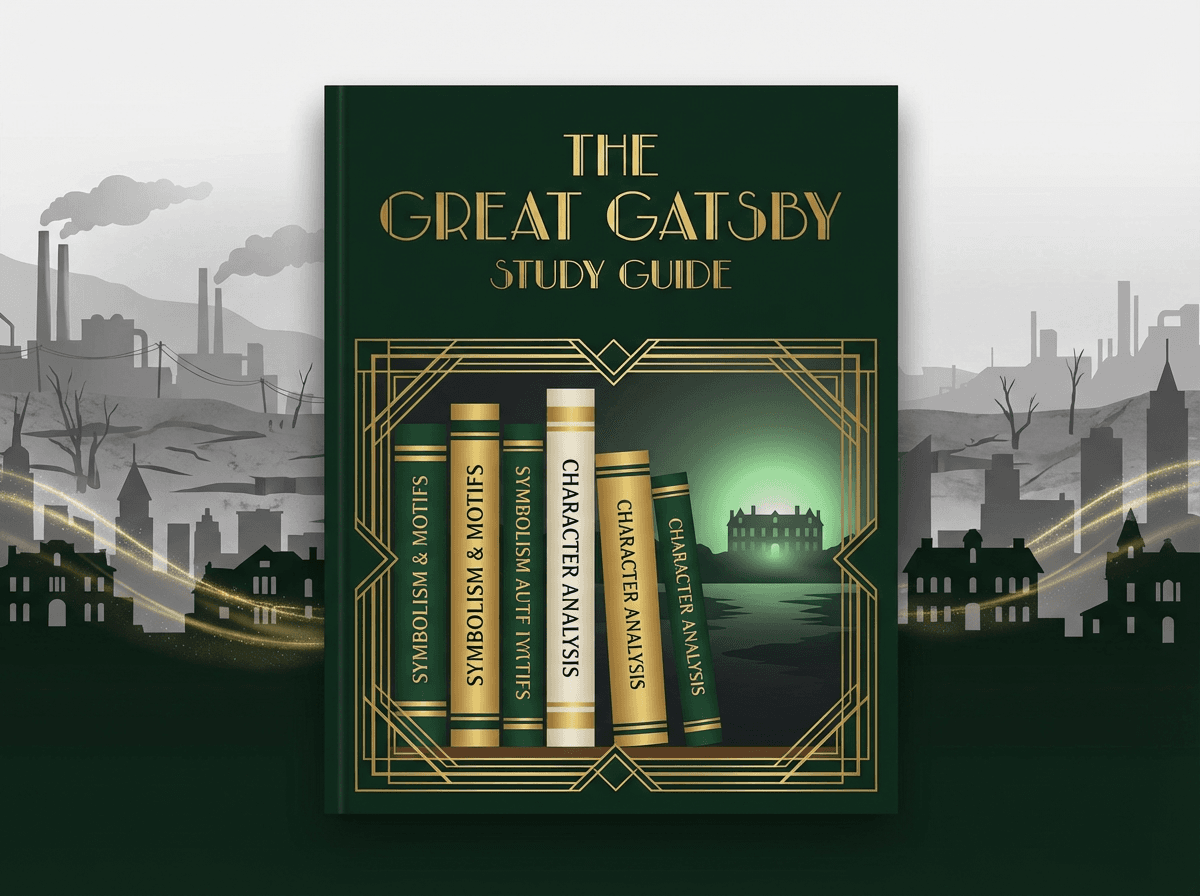
F. Scott Fitzgerald’s The Great Gatsby (1925) is a classic because it’s more than Jazz Age glamour—it’s a sharp critique of wealth, class, and the American Dream. If you are drafting a detailed analysis essay, you need more than just “vibes”: you need themes, character motivations, and textual evidence you can actually use.
This study guide breaks down:
-
Major themes (American Dream, class divide, obsession)
-
Key symbols (green light, Valley of Ashes, Eckleburg’s eyes)
-
Character analysis (Gatsby, Daisy, Nick, Tom, Myrtle)
-
College-level essay topics + thesis starters you can adapt
Quick Facts: The Great Gatsby at a Glance
| Category | Key Details |
| Major Themes | American Dream, Old Money vs. New Money, Love/Obsession, Moral Decay |
| Key Symbols | Green Light, Valley of Ashes, Dr. T.J. Eckleburg’s Eyes, Color Imagery |
| Setting | 1922; Long Island (West Egg/East Egg) + NYC |
| Narrator | Nick Carraway (often read as unreliable/biased) |
| Why It Still Hits | “Performing” wealth, status anxiety, and the gap between image vs reality |
Major Themes in The Great Gatsby
The Death (or Collapse) of the American Dream
Core idea: Gatsby believes money can rewrite identity and time—yet the novel suggests the Dream is corrupted by class and hypocrisy.
Evidence you can use in an essay
-
Gatsby’s self-invention shows the Dream as performance (reinventing name, status, backstory).
-
Gatsby’s end suggests that effort and wealth don’t equal belonging when social power is inherited.
How to write it as an argument
Fitzgerald frames the American Dream as a fantasy built on image-making; Gatsby’s rise proves ambition is possible, but his fall shows social legitimacy is guarded by old money.If you need help structuring this debate into a cohesive paper, reviewing the basics of how to write an argumentative essay can help you organize your claims effectively.
Old Money vs. New Money (Class Divide)
Fitzgerald turns geography into class:
-
East Egg (old money): inherited status, social “permission,” protected by reputation
-
West Egg (new money): wealth without pedigree, constantly judged as “not quite”
-
Valley of Ashes: labor and waste—the human cost of elite lifestyles
High-value essay angle The tragedy isn’t only Gatsby’s death—it’s that Gatsby can buy luxury, but not acceptance.
Thesis starter
The novel suggests class is not a financial category but a cultural one: Gatsby’s wealth grants access to spectacle, not to the social authority that East Egg inherits.
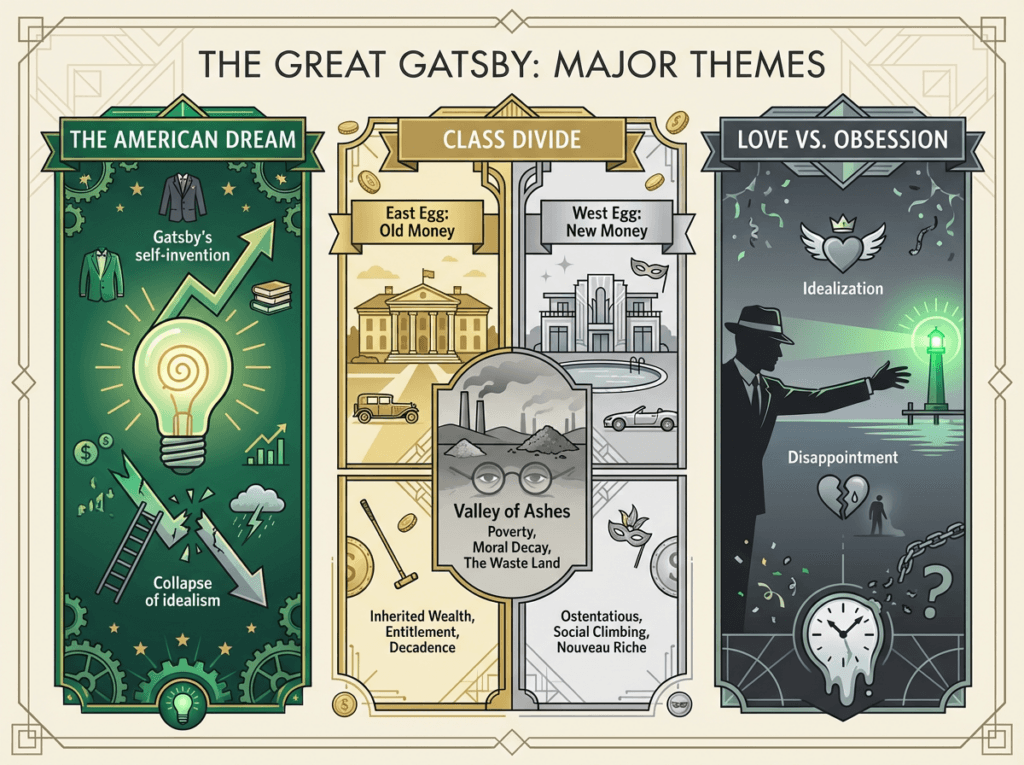
Love vs. Obsession (Idealization)
Gatsby’s “love” often reads as idealization: Daisy becomes a symbol of the life he wants.
Evidence points
-
Gatsby clings to an imagined past and treats Daisy as proof that the dream is real.
-
Daisy cannot (and does not) match Gatsby’s fantasy—creating inevitable disappointment.
Essay framing
Gatsby’s relationship to Daisy is fundamentally an act of idealization: he turns her into a symbol of the social world that once excluded him. By insisting she confirm a “perfect” past and fit his scripted future, Gatsby treats love as proof that self-invention has succeeded. The inevitable collapse comes from the gap between Daisy as a person and Daisy as an emblem of status.
Key Symbols Explained (With Essay-Ready Structure)
The Green Light (Meaning + Evidence + Essay Use)
Meaning: hope, desire, the future—especially the feeling of something always just out of reach.
Evidence moments
-
Early in the novel, Gatsby reaches toward the light—desire made physical.
-
Later, the light becomes “just a light,” suggesting the dream collapses when confronted with reality.
How to use it in a paragraph
-
Claim: The green light symbolizes desire as distance.
-
Evidence: Gatsby’s reaching gesture (early) + the later deflation (ending).
-
Analysis: The dream survives only while it remains unattained.
The Valley of Ashes (Moral & Social Decay)
Meaning: the hidden cost of wealth—industrial waste, exploitation, and spiritual emptiness.
Evidence moments
-
It sits between Eggs and NYC: a literal “in-between” space showing who is sacrificed for elite comfort.
-
Myrtle and George’s lives are shaped by this environment, contrasting with the carelessness of the rich.
Essay use
The Valley of Ashes reveals that the novel’s glamour depends on a system that produces waste—material and human.
Dr. T.J. Eckleburg’s Eyes (God, Surveillance, or Emptiness?)
Meaning options (pick one and argue it):
-
God/judgment (as George Wilson interprets it)
-
Modern surveillance (people watched but not saved)
-
Spiritual emptiness (a sign with no true moral authority)
Best college move: choose ONE interpretation and show how characters behave as if consequences don’t exist—until they do.
Color Symbolism (Fast Evidence Bank)
-
White: “innocence” that can be performative or false
-
Gold/Yellow: wealth + corruption + moral rot
-
Grey/Ash: lifelessness, exploitation, decay
Essay tip: Track colors in scenes involving Daisy, Gatsby’s car/wealth imagery, and the Valley of Ashes.
Character Analysis: Motivations You Can Argue
Jay Gatsby
What he wants: not just Daisy—belonging and legitimacy. How he operates: self-invention, performance, spectacle.
College-level claim
Gatsby represents the American Dream as aspiration turned into obsession: he can manufacture wealth, but not the social reality that wealth is supposed to secure.
Daisy Buchanan (“a beautiful little fool”)
That quote isn’t proof Daisy is “dumb.” It’s proof she’s cynical and socially aware.
How to analyze
-
Daisy understands that gender and class reward beauty and compliance, not honesty.
-
Her choices reveal survival logic: safety > truth.
Nick Carraway (Unreliable Narrator?)
Nick claims to be objective, but his narration often contains:
-
moral judgments
-
selective sympathy
-
shifting standards for different characters
Essay-ready angle
Nick’s narration functions like a filter: the novel’s moral universe is shaped by what Nick notices, excuses, and condemns.
10 Strong Essay Topics + Thesis Starters (College-Level)
-
Nick Carraway’s Bias: How does Nick shape Gatsby into a myth more than a man?
-
Class as Culture (East Egg vs. West Egg): Why is wealth not enough for Gatsby to “belong”?
-
The American Dream: Does the novel argue the Dream is impossible—or corrupted by class and hypocrisy?
-
Performance & Spectacle (Gatsby’s Parties): How do the parties function as social theater rather than community?
-
Gender Roles (Daisy, Jordan, Myrtle): How do these women reveal the limits placed on women in the 1920s?
-
Moral Geography (East Egg/West Egg/Valley of Ashes): How do locations act as moral maps that shape character destiny?
-
Carelessness & Consequences (Tom and Daisy): How do the rich avoid accountability—and why does that drive the tragedy?
-
The Green Light: Why does the green light lose symbolic power by the end of the novel?
-
Cars and Modernity: What do cars symbolize about speed, power, and destruction in the story’s moral universe?
-
Meyer Wolfsheim and Crime: How does Wolfsheim link wealth to crime, legitimacy, and “respectability”?
Optional “plug-and-play” thesis template
Fitzgerald uses [symbol/setting] to show that [theme] is sustained by [social structure], and the novel’s tragedy exposes [consequence] when image replaces reality.
A 1500-Word Essay Outline You Can Follow
Intro (150–200 words)
-
Hook (1–2 sentences): Start with a compelling statement or quote. If you’re stuck on the very first sentence, check out these creative essay hooks to grab the reader’s attention immediately.
-
Context: Jazz Age + Class dynamics.
-
Thesis: 1 sentence, specific and debatable.
Body Paragraph 1
-
Topic sentence (theme claim)
-
Evidence (1–2 quotes or moments)
-
Analysis (how evidence proves claim)
Body Paragraph 2
-
Topic sentence (symbol/setting)
-
Evidence
-
Analysis
Body Paragraph 3
-
Topic sentence (character motivation or narration)
-
Evidence
-
Analysis
Counterargument (optional but strong in college essays)
-
Present a competing reading
-
Refute with text-based reasoning
Conclusion (150–200 words)
-
Restate thesis in new words
-
Explain why it matters (class, identity, modern relevance)
Writer’s Block? Turn This Guide Into an Essay Fast
Understanding the symbols is one thing; organizing them into a coherent 1,500-word essay with a strong thesis is another.
If you have ideas but are stuck on the structure, you don’t need to stare at a blank page. You can use AI tools like Essaypass to build your outline and first draft instantly.
Try this workflow (It takes 5 minutes):
-
Pick a topic from the list above (e.g., “Class as Culture”).
-
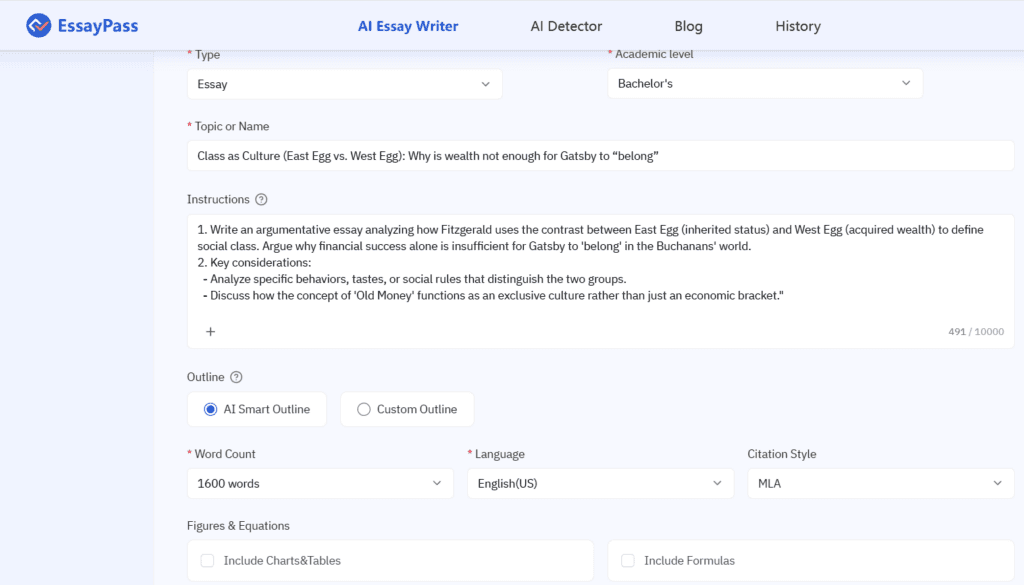
Copy the prompt below.
-
Paste it into Essaypass:
-
Customize your settings: Select your desired word count and citation style (e.g., MLA or APA).
-
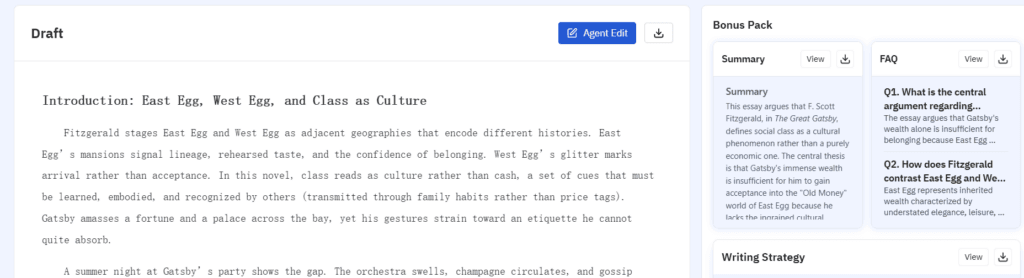
Hit Generate: In minutes, you will receive a complete first draft along with 5 essential study aids:
-
A full summary
-
Topic-specific FAQs
-
A writing strategy
-
Downloadable references
-
An AI editing assistant to help you refine the final polish
-
Click here to try the Essaypass AI Essay Writer and turn your chaotic notes into a finished paper before the deadline hits.