Harper Lee’s To Kill a Mockingbird is often remembered for its courtroom drama, but many students struggle when it comes time to write an essay.
The problem is rarely understanding the plot. The real challenge is understanding how the childhood episodes in Part 1 prepare readers for the injustice of Part 2. Students who treat these sections as separate usually end up with essays that summarize instead of analyze. If you are unsure how to make that shift from summary to deep critique, understanding the basics of how to write an analysis essay is a great starting point.
This To Kill a Mockingbird outline is designed to help you turn plot knowledge into high-scoring literary analysis.
This guide includes:
-
A chapter-by-chapter summary of To Kill a Mockingbird
-
Clear explanations of themes and symbolism
-
Key quotes explained
-
A proven essay structure template teachers reward
To Kill a Mockingbird Plot Overview: How the Novel Is Structured
Overall, the novel develops in three major sections, each reflecting Scout and Jem’s moral growth. Understanding this structure is essential for writing strong essays.
For a broader look at structuring your paper effectively, you can review our guide on essay format essentials.
Part 1: Childhood Innocence & Moral Foundations (Chapters 1–11 Summary)
Many students rush through Part 1, assuming the story “really starts” with the trial.
This is a mistake.
Part 1 establishes the moral baseline that makes the injustice of Part 2 inevitable.
Maycomb as a Moral Microcosm (Chapters 1–3)
-
Maycomb, Alabama is introduced as a rigid, tradition-bound town during the Great Depression.
-
Scout narrates with childhood innocence, exposing adult hypocrisy unintentionally.
-
School scenes reveal class prejudice and the limits of institutional fairness.
Why this matters: Lee shows that injustice is normalized long before Tom Robinson’s trial.
Boo Radley and the Failure of Empathy (Chapters 4–8)
-
Boo Radley is treated as a frightening myth rather than a human being.
-
Gifts in the tree (gum, coins, carved soap figures) contradict the town’s narrative.
-
The cemented knothole symbolizes how empathy is deliberately shut down.
Common student mistake: Treating Boo Radley as a side plot instead of a parallel moral case to Tom Robinson.

Atticus Finch and the Meaning of True Courage (Chapters 9–11)
-
Atticus agrees to defend Tom Robinson despite public backlash.
-
The mad dog incident reveals Atticus’s quiet authority.
-
Mrs. Dubose teaches Jem that courage means standing up even when defeat is certain.
Key Quote Explained:
“You never really understand a person until you consider things from his point of view…”
This line functions as the moral thesis of the novel.
Part 2: The Trial and the Collapse of Innocence (Chapters 12–21 Summary)
This section contains the novel’s most famous scenes, but strong essays focus on what the trial reveals, not just what happens.
The Jailhouse Incident (Chapter 15)
-
A lynch mob confronts Atticus.
-
Scout’s innocent conversation with Mr. Cunningham dissolves the violence.
Critical insight: Rational arguments fail where human recognition succeeds.
The Trial of Tom Robinson (Chapters 17–19)
-
Atticus proves Bob Ewell is left-handed.
-
Tom Robinson’s crippled arm makes the accusation impossible.
-
Mayella Ewell is both a victim and a participant in injustice.
Despite overwhelming evidence, the verdict is predetermined.
The Verdict and Jem’s Loss of Innocence (Chapters 20–21)
-
Tom Robinson is found guilty.
-
Jem’s belief in justice collapses.
Key Theme: The law cannot protect innocence in a prejudiced society.
Part 3: Consequences and Moral Resolution (Chapters 22–31 Summary)
Part 3 shows the aftermath of injustice and unites the novel’s two major moral cases.
Tom Robinson’s Death (Chapters 24–25)
-
Tom is shot while attempting to escape prison.
-
Mr. Underwood compares his death to “the senseless slaughter of songbirds.”
Important: Tom’s death is not a plot twist—it is the inevitable outcome of systemic racism.
Bob Ewell’s Attack and Boo Radley’s Intervention (Chapters 28–29)
-
Bob Ewell attacks Scout and Jem on Halloween night.
-
A mysterious figure saves them.
Boo Radley Revealed (Chapters 30–31)
-
In a powerful reversal, Boo Radley is revealed as the children’s protector.
-
Sheriff Tate shields Boo from public attention.
-
Scout stands on Boo’s porch and finally understands Atticus’s lesson.
This moment unifies the novel’s themes of empathy, innocence, and moral responsibility.
To Kill a Mockingbird Essay Outline
Strong essays analyze themes rather than summarize events.
Use this structure to build a clear, focused argument.
1. Introduction
-
Hook: A statement about empathy or moral blindness. (Struggling to start? Check out these essay hooks to grab your reader’s attention instantly).
-
Context: Harper Lee and 1930s racial injustice.
-
Thesis Statement: Through Tom Robinson and Boo Radley, Harper Lee shows that prejudice thrives where empathy fails, and moral growth requires seeing the world through others’ perspectives.
2. Body Paragraph 1: The Mockingbird Symbolism
-
Topic Sentence: The mockingbird represents innocence destroyed by cruelty.
-
Evidence: Tom Robinson’s kindness toward Mayella Ewell.
-
Analysis: Innocence offers no protection in a racist system.
3. Body Paragraph 2: The Failure of Justice
-
Topic Sentence: The trial exposes the limits of legal fairness.
-
Evidence: Atticus’s evidence versus the verdict.
-
Analysis: Social prejudice outweighs logic and law.
4. Body Paragraph 3: Scout’s Moral Growth
-
Topic Sentence: Scout connects the novel’s two halves.
-
Evidence: Standing on Boo Radley’s porch.
-
Analysis: She practices empathy rather than merely understanding it.
5. Conclusion
-
Restate thesis.
-
Connect Tom Robinson and Boo Radley.
-
Reflect on the novel’s relevance today.(For more tips on wrapping up strong, read our guide on essay conclusion tips).
Frequently Asked Questions
What is the main message of To Kill a Mockingbird?
The main message of To Kill a Mockingbird is that empathy is essential to justice. Harper Lee shows that laws and evidence alone cannot prevent injustice if people refuse to understand one another.
Through Tom Robinson’s trial, the novel reveals how society can believe itself fair while acting unjustly. Atticus Finch teaches Scout that true justice requires seeing the world from another person’s perspective, a lesson Scout fully understands by the end of the novel.
Why is the novel called To Kill a Mockingbird?
The novel is titled To Kill a Mockingbird because the mockingbird represents innocent individuals harmed by prejudice. Mockingbirds cause no harm, and destroying them is a moral wrongdoing.
Tom Robinson and Boo Radley are human “mockingbirds”: Tom is punished despite his innocence, and Boo is misunderstood and nearly harmed by public judgment. The title emphasizes that destroying innocence through fear and ignorance is a moral crime.
Turn Your To Kill a Mockingbird Outline into a Strong Essay
Understanding the novel is only the first step. Many students lose marks because their essays summarize instead of analyze.
Once you have your ideas down, proper editing and proofreading are crucial to ensure your analysis shines.
Essaypass helps students:
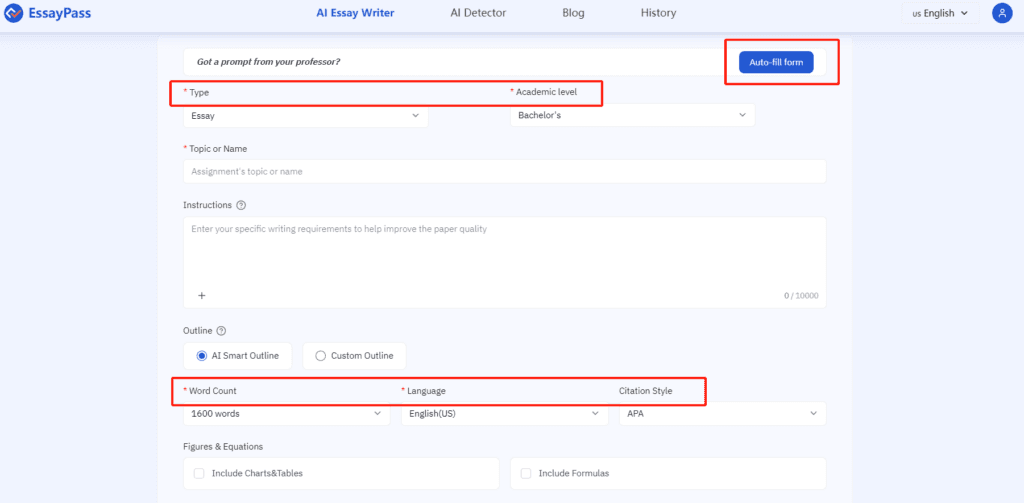
- Automatically generate outlines based on essay requirements, or expand a custom outline into a full essay with AI Essay Writer.
-
Flexible word count options from 800 to 20,000 words.
-
Support for major Eight Format citations (MLA, APA, Chicago).
-
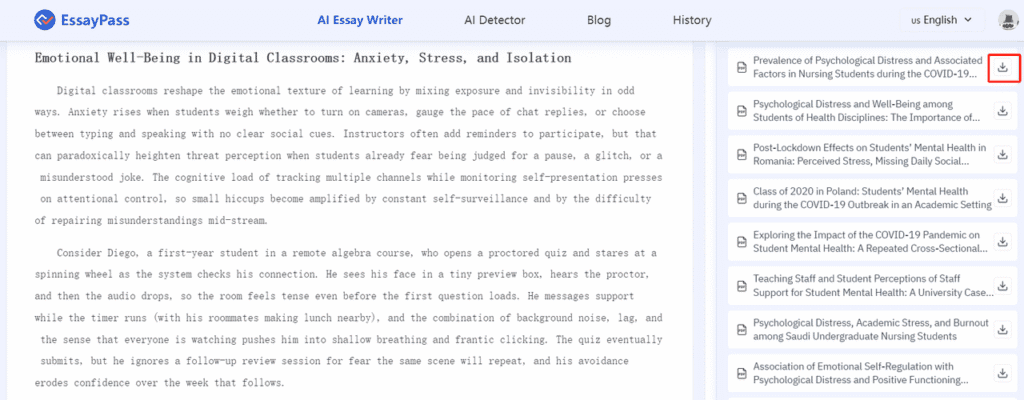
Find precise references with downloadable sources.
-
Optional Turnitin-based AI and originality checks using AI Detector.
👉 Write your To Kill a Mockingbird essay with confidence using Essaypass.